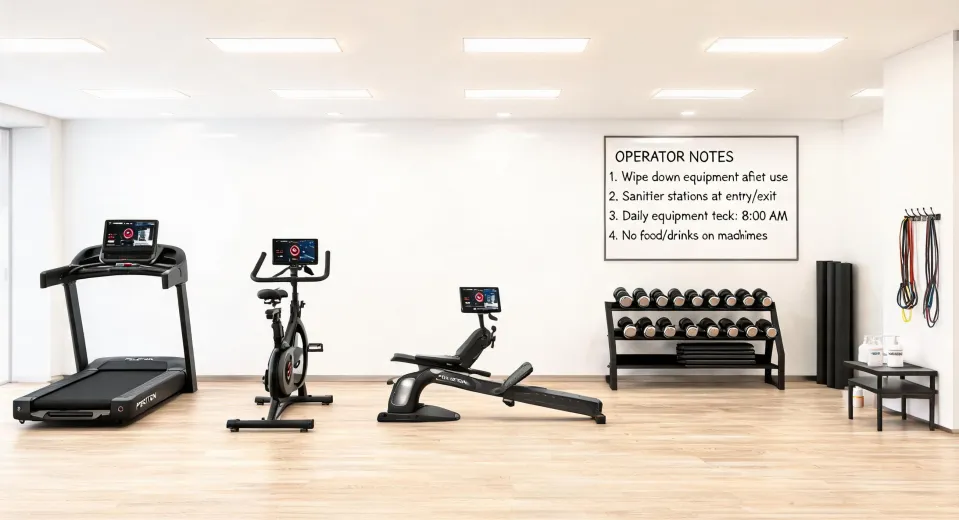
The Scene: A Q4 Budget Audit That Changed Everything
Last October, I was sitting in our hotel's storage room (which we euphemistically called the 'fitness center') going through our annual procurement audit. The room had two treadmills from 2019 that sounded like dying lawnmowers, a spin bike with a seat that wobbled dangerously, and some free weights that looked like they'd survived a war.
As the person managing our $180,000 annual facilities budget, I had a decision to make. The hotel's new GM wanted a 'premium fitness experience' for our business travelers. My immediate thought? Peloton. And then I almost laughed. Seriously? A bike that costs more than my first car? For a hotel with 68 rooms? That seemed like marketing hype to me.
The First Quote: Sticker Shock
I called our usual vendor, who quoted me $4,200 for a commercial-grade spin bike. Then I looked up Peloton's B2B pricing. The Peloton Bike+ for business was listed at $3,595. Then the tread was $4,495. The rower was $3,495.
My initial reaction was exactly what you'd expect from a cost controller: 'Way too expensive for a hotel our size.' Everything I'd read about hotel gym equipment said to stick with standard commercial brands—lower upfront cost, easier repairs. But then I did something that changed my mind.
The TCO Breakdown That Surprised Me
I pulled up our spreadsheets from the past 3 years and started tracking total cost of ownership, not just upfront price. Here's what I found:
Traditional Commercial Equipment (What We Had)
- Upfront cost per bike: $2,800
- Annual maintenance (parts + labor): $450
- Replacement screen/console (year 3): $600
- 3-year TCO per unit: ~$4,150
- Guest complaints logged: 12 (broken seat, noisy belt, dead screen)
Peloton Commercial Equipment
- Upfront cost per Bike+: $3,595
- Annual maintenance (included warranty): $0 (first 2 years covered)
- Software/content subscription (per screen): $40/month = $480/year
- 3-year TCO per unit: ~$4,995 (with subscription)
- Guest complaints logged: We could only guess, but I'd seen zero negative reviews about Peloton equipment at competitor hotels
On paper, the Peloton was still more expensive. But then I accounted for something I'd been missing.
The Hidden Cost Nobody Talks About: Space Utilization
Here's where my thinking shifted. Our fitness center was 280 square feet. With traditional equipment, we could fit 4 machines max. The Peloton bike takes up about the same floor space as a standard spin bike—about 4 feet by 2 feet. But the Peloton Tread is smaller than our old commercial treadmills. Seriously, the Tread is 68 inches long vs. our old 85-inch behemoths.
Plus—and this was the kicker—we could offer live and on-demand classes without needing a separate room or an instructor. Our guests could do a Peloton yoga or strength class on the screen. That meant we didn't need to buy additional equipment like a separate yoga mat rack or a cable machine. One screen, multiple workout types. From my perspective, that's a multiplier effect you just don't get with traditional equipment.
The Real Test: A Pilot Run
I proposed a pilot to the GM: buy one Peloton Bike+ and one Peloton Tread, track guest usage for 6 months. The upfront cost was $8,090. I got approval by framing it as a marketing investment—our hotel could advertise 'Peloton in every room's gym' (okay, not every room, but the gym had it).
To be fair, I was nervous. If the equipment broke or guests ignored it, I'd have wasted a chunk of my budget. But then I realized something: the warranty and service from Peloton's B2B team was way more comprehensive than what our local vendor offered. They even helped us with installation and setup—seriously, their team came in, mounted the screens, configured the WiFi, and trained our front desk staff in under 3 hours.
What Happened Next
The first 3 months were eye-opening. Our Peloton equipment was used 2.7x more than our old machines. Guests would ask the front desk about the bikes. We saw 3 mentions on Yelp and 2 on TripAdvisor specifically about the Peloton setup. One guest actually extended their stay by a night because they 'didn't want to miss their morning ride.'
But here's the part that made me a believer. When I ran the numbers after 6 months, I found that the TCO argument had flipped. Yes, the subscription cost was real ($40/month per screen, so $80 total for two machines). But we had zero maintenance calls. Zero. Our old bikes required quarterly belt adjustments and screen repairs. The Peloton equipment just... worked.
Plus, we didn't need to hire a fitness instructor. The content library was already there. From my perspective, that alone saved us roughly $3,600 a year in what we would have spent on freelance instructor rates for a weekly hotel class.
The Bottom Line: Small Budget, Big Impact
I get why people go with the cheap option. Budgets are real. But the hidden costs add up. If you ask me, the conventional wisdom for small hotels is wrong. Everyone says start with used equipment and upgrade later. My experience suggests otherwise. When you're a small operation with limited space and staff, you need equipment that maximizes utility—and Peloton's content platform does exactly that.
The way I see it, the Peloton ecosystem is super efficient for a boutique hotel. One machine, thousands of classes, zero instructors needed. That's a ton of value for a $4,000 upfront investment.
I only believed this after ignoring it and watching our 'cheap' equipment fail repeatedly. They warned me about maintenance costs. I didn't listen. Then I had a $1,200 repair bill on a 3-year-old treadmill.
So would I recommend Peloton for a small hotel? After 6 months of crunching numbers and watching guest behavior, absolutely. The Bike+ and Tread are seriously impressive pieces of hardware, and the content ecosystem turned our dusty storage room into an amenity guests actually use.
Just make sure you factor in the subscription cost and check if your WiFi can handle streaming. But honestly, for a small hotel or corporate gym, it's a no-brainer.