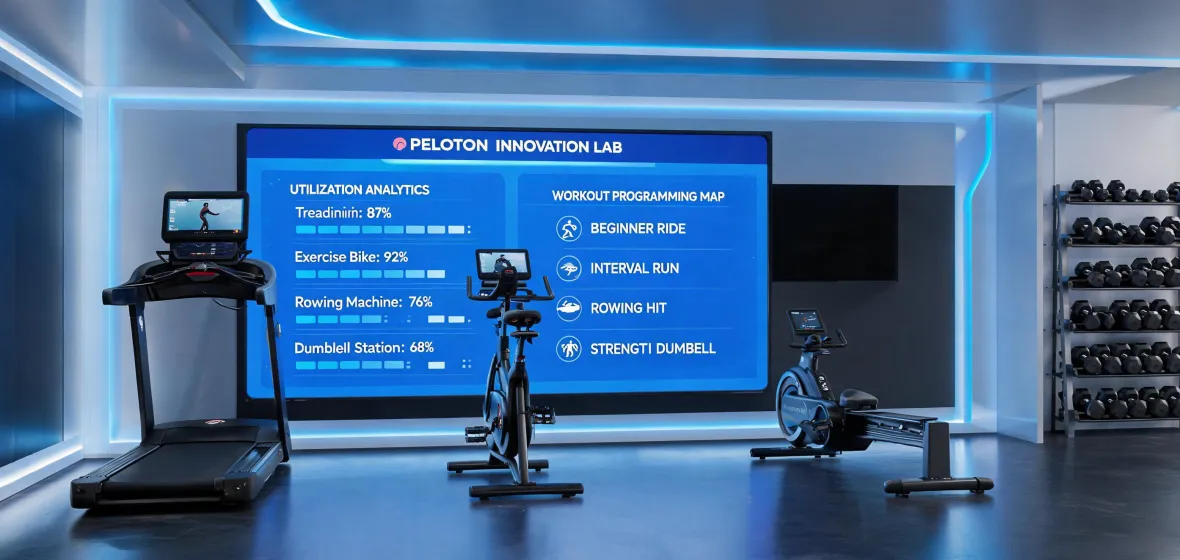
The lab translates product signals into operator-ready ideas: better onboarding, smarter equipment mix decisions, facility analytics, and member engagement that can be managed by real staff in real rooms.
Adaptive Cardio Paths
Prototype programming maps treadmill, bike, and rower sessions to different facility goals: quick hotel workouts, corporate challenge weeks, apartment resident retention, and boutique cross-training. Operators can use these paths to discuss equipment mix, screen messaging, cleaning intervals, and staff support before the final product order. The concept is not a guaranteed performance claim; it is a planning framework that makes member journeys more explicit.
Strength Companion Zones
Commercial strength planning often fails when accessories are treated as afterthoughts. The lab explores dumbbell storage, mat zones, kettlebell circuits, and guided strength prompts that bridge the gap between cardio familiarity and balanced training. This helps facilities build approachable strength spaces without overwhelming new members or forcing staff to supervise every movement.
Facility Utilization Signals
Equipment demand, peak-hour crowding, service events, and member feedback can guide future refresh decisions. Peloton's commercial planning lens turns those signals into operator questions: which equipment earns floor space, where does a room create wait time, and when should a facility add strength capacity instead of another cardio unit?
Launch-Week Playbooks
A connected room succeeds when staff can explain it clearly. Lab playbooks cover front-desk language, trainer orientation, resident email copy, cleaning signage, and service escalation. The goal is to help the room feel intentional on day one, not to create a technology showcase that only one specialist understands.