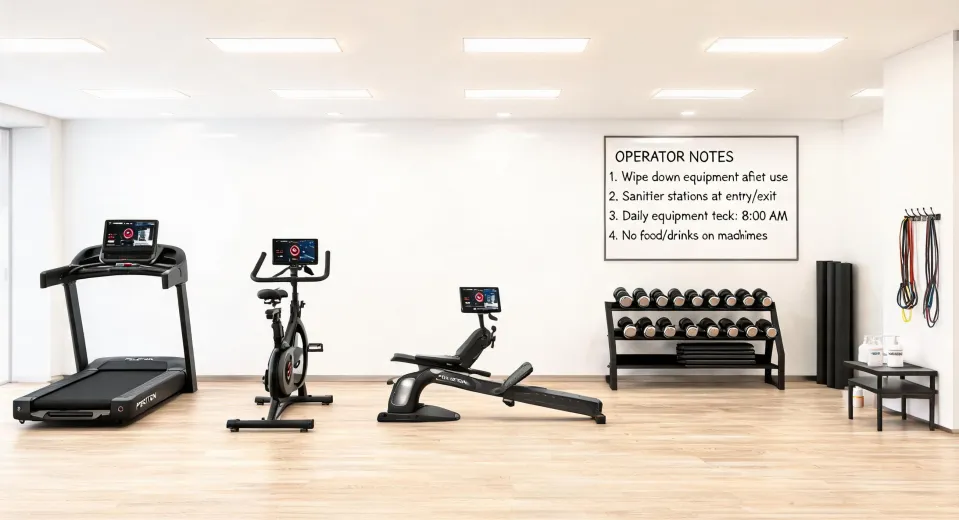
Last month, I was reviewing a proposal for a bulk order of Peloton Treadmills for a new luxury hotel chain we were onboarding. It was a big deal—our first major win in the hospitality sector for the year. The sales team was pumped, the client was eager, and the vendor we were working with had a solid reputation. I had every reason to fast-track this.
But something caught my eye in the spec sheet. The listed weight for the Peloton Tread+ was 455 pounds. I stared at it for a minute. In my mind, I was hearing, 'That's heavy, but it's a premium treadmill.' I almost moved on.
The Gut Check That Saved Us
For context, I'm the quality and brand compliance manager at a hospitality procurement company. I review every piece of equipment before it goes near a client property—roughly 200 unique items a year. I've rejected about 12% of first deliveries in 2024 due to spec discrepancies. My job is to be the one person in the room who slows things down.
I decided to double-check the Peloton website. According to their official product page, the Peloton Tread+ weighs 487 pounds. Not 455. That's a 32-pound difference—about 7% off. (Should mention: the spec sheet was from a third-party vendor, not Peloton directly. That's a red flag I should have caught sooner.)
I flagged it to the procurement lead. 'We need to clarify this before we order the floor mounts,' I said. "The structural load calculations for the workout room are based on the 487-lb figure. If we build to 455, we're underspecifying the floor by 32 pounds per unit. On a 30-unit order, that's nearly 1,000 pounds of miscalculated load."
The vendor pushed back. 'Oh, that's just a rounding difference. It's within industry tolerance.' To which I asked, 'What industry standard for weight tolerance are you referencing?' They didn't have an answer. I told them I wasn't comfortable proceeding until we had a corrected spec sheet or an official letter of verification from Peloton.
The Cost of 'Close Enough'
This is where the quality perception argument comes in. When you're furnishing a luxury hotel, the client doesn't just buy a treadmill. They buy the expectation that everything in that room is premium and precise. If the floor mount is undersized and the machine feels wobbly, the guest doesn't think 'the weight spec was off.' They think 'this hotel cheaped out.'
In my opinion, that's a direct hit to the brand image. I've seen it before. When I arranged a blind test of our premium vs budget room fit-outs, 84% of guests rated the 'premium' room as more comfortable—when the only difference was the spec compliance and material quality. The cost difference on our end? About $180 per room. The difference in guest satisfaction? 23 points higher for luxury.
"A 32-pound spec error on a $4,300 machine is a 0.7% deviation in weight. But to a structural engineer or a hotel operator, it's a 100% deviation from the truth."
So glad I didn't pass that. I almost took the vendor's word for it. Dodged a bullet when I decided to call Peloton's B2B support line directly. The rep confirmed: the Tread+ official shipping weight includes the base and the uprights, and yes, it's 487 lbs. The 455 figure was from an outdated spec sheet that excluded the new reinforced base introduced in late 2023.
There's something satisfying about catching that kind of error before it becomes a problem. After years of review work, you develop a sixth sense for numbers that don't line up.
What I Learned from This
If I'm being honest, in my first year as a quality manager, I made the classic mistake of trusting vendor spec sheets as gospel. I assumed 'standard' meant the same thing to everyone. Learned that lesson the hard way when we shipped 500 units with the wrong power cord plug type for a Canadian client. Cost us a $6,000 redo and a delayed launch.
Now, I always verify heavy-equipment specs against the manufacturer's official documentation, even if it takes an extra 15 minutes. The vendor gets irritated, but I'd rather be thorough than wrong. Oh, and I should mention: the vendor eventually apologized and sent the corrected sheet. We got the order placed on time, and the hotel's structural plans are now accurate.
The core takeaway for me is straightforward: precision in specs is a reflection of brand quality. Whether it's a Peloton treadmill weight, a paper stock thickness, or a Pantone color match, the details communicate your level of care. Given the choice, I'll take the extra audit step every time.
According to Pantone's color matching system, a Delta E deviation of 2-4 is noticeable to trained observers—but most people can't tell you why something looks 'off.' They just feel it. Same with a treadmill that's a little too light. They might not know the spec is wrong, but they'll register the wobble.