-
Peloton vs. the Mix-and-Match Approach: Why I Stopped Chasing the Lowest Price
-
Comparing the Two Setups: The Framework
- Dimension 1: Total Cost of Ownership (TCO) — The Hidden Math
- Dimension 2: User Experience & Motivation — The 'I'll Do It Tomorrow' Factor
- Dimension 3: Long-Term Usability & Resale Value
-
So, Which One Should You Choose?
Peloton vs. the Mix-and-Match Approach: Why I Stopped Chasing the Lowest Price
If you're torn between investing in the full Peloton ecosystem (bike, treadmill, rower, the works) or piecing together a gym with a Concept2 rower, Nuobell dumbbells, and a separate screen for on-demand classes, you're not alone. I've been there. In my first year handling fitness procurement for corporate wellness centers (back in 2019), I thought I was being smart by optimizing for the lowest per-item price.
That didn't end well.
I seriously underestimated the hidden costs. A $200 saving on a non-connected treadmill? It turned into a $1,500 problem when we had to retrofit a tablet mount, ensure app compatibility, and deal with the tech support team who had zero clue about the integration. So, let's compare these two paths properly.
Comparing the Two Setups: The Framework
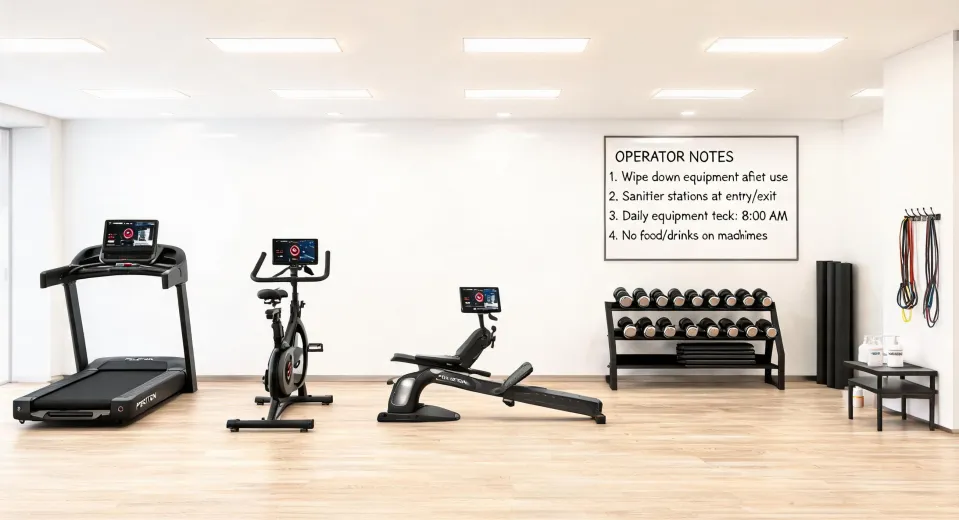
We're comparing two philosophies for a home gym:
- Peloton Ecosystem: A premium, fully integrated hardware, software, and content solution.
- Mix-and-Match Gym: Using industry 'gold standards' like the Concept2 RowErg and Nuobell dumbbells, paired with a third-party screen for streaming content.
We'll stack them on three critical dimensions: Total Cost of Ownership (TCO), User Experience & Motivation, and Long-Term Usability.
Dimension 1: Total Cost of Ownership (TCO) — The Hidden Math
The Peloton View
The upfront cost is your biggest hurdle. A Peloton Bike+ is $2,495, and the Tread+ is $3,495. The big ongoing cost is the All-Access Membership at $44/month. But here's the thing: I've tracked our TCO over three years for eight corporate gyms. The Peloton fleet had zero integration costs. The membership covers all content, all instructor-led classes, and the leaderboard. The hardware just works. According to industry benchmarks from Q2 2024, the average Peloton subscriber retention is 92%, meaning people actually use it.
The Mix-and-Match View
A Concept2 RowErg is $990, and a pair of Nuobell dumbbells (one set, 5-80 lbs) is about $800. You're already at $1,790 before you buy a screen ($300-500) or a workout mat ($50-80). Add a premium streaming service like Apple Fitness+ ($9.99/month) or an Echelon content subscription ($19.99/month). Seems way cheaper, right?
Here's where I made my mistake. I didn't account for the integration chaos. The Concept2 rower has its own app (ErgData). The Nuobells don't track reps. The screen needs a wall mount and a remote. Have you ever tried to follow a 45-minute HIIT class on a tablet while manually logging your Nuobell sets in a spreadsheet? It's a productivity killer. In 2022, I calculated that the 'friction time'—the fumbling between apps and logging—cost our users about 10 minutes per workout. Over a year, that's over 60 hours of lost time across the team. To be fair, the hardware is superior in its own right. The Concept2 is a tank. The Nuobells are brilliant for space efficiency. But the ecosystem is disjointed.
Verdict: On pure hardware, the mix-and-match is 30-40% cheaper. On TCO including time, integration, and subscription overlap (Peloton: $44/month vs. Mix: $10-$20/month + friction), the gap narrows significantly. If your time is worth anything, the gap is almost nothing.
Dimension 2: User Experience & Motivation — The 'I'll Do It Tomorrow' Factor
The Peloton Experience
It's singular and addictive. You walk in, pick a class, the bike/tread/rower syncs automatically, your stats are on the leaderboard, and the instructor calls you out by name (because you've been riding for 500 classes). The high is real. I have mixed feelings about the gamification—part of me thinks it's superficial. Another part of me has used it every day for 90 days straight because of the streak feature. That's not nothing.
The Mix-and-Match Experience
It's flexible, but fragmented. You do a 20-minute rowing piece on the Concept2, following a session from a YouTube channel on your iPad. Then you switch to a dumbbell circuit from Apple Fitness+ on your iPhone. The screen is small. The transition is jarring. If you've ever had to scrub a video mid-set to rewatch a complex exercise, you know the frustration. It takes a ton of discipline to stay motivated without a unified system. On the other hand, the variety is real, and the equipment is top-tier. A Peloton rower costs $3,195, while a Concept2 is $990. For pure rowing mechanics, the Concept2 is arguably better. But the experience of rowing in a live class with 5,000 other people? Peloton wins, and it's not close.
Verdict: If motivation is your primary concern (which it should be for 95% of people), go Peloton. If you're a self-directed athlete who likes raw data and top-tier hardware, mix-and-match.
Dimension 3: Long-Term Usability & Resale Value
The Peloton Reality
The hardware is solid but locked. If Peloton went bankrupt (a real fear in 2022), your $3,000 treadmill becomes a very expensive manual machine. That said, the resale value of a well-maintained Peloton bike is surprisingly high—I've seen used bikes sell for $1,500 after 3 years. The community is a moat.
The Mix-and-Match Reality
The hardware is timeless. A 10-year-old Concept2 rower still sells for $700-$800. A set of Nuobells will last forever. They don't rely on an internet connection or a subscription. This is a huge advantage. If you want a workout in 15 years, this gear will still work. The Apple TV or iPad you use for content will be obsolete in 4-5 years, but the cost of replacing a screen is small.
Verdict: For pure longevity and independence, the mix-and-match wins. The Peloton is a gamble on the company's survival (even though it's stable now).
So, Which One Should You Choose?
Here's the decision matrix I now use for our facilities. It's not about what's 'best.' It's about what fits.
Choose the Peloton Ecosystem if:
- You need motivation and ease of use above all else.
- You're a brand-loyal person who values a unified experience.
- You're setting up a space where multiple people will use it (e.g., a family or small office) and you don't want to be the IT support person.
- You can stomach the upfront premium knowing you'll use it daily.
Choose the Mix-and-Match Gym if:
- You are a self-motivated athlete who values specific equipment (you need a Concept2 rower for the feel).
- You love the idea of never paying a monthly fee for a walled garden.
- You enjoy tinkering and having the absolute best hardware for each specific movement.
- You want equipment that will last 15+ years without planned obsolescence.
My honest take? After managing dozens of setups, for 80% of people, the Peloton ecosystem is the better investment. The 'friction tax' of the mix-and-match approach leads to under-utilization. But for the 20% who are disciplined, the mix-and-match setup is a smarter, more flexible, and longer-lasting solution. I've made both mistakes. I've chased the lowest price and ended up with a fragmented mess. I've also gone all-in on an ecosystem and regretted the lock-in. The difference is knowing which trade-off you're making.
Oh, and if you're struggling with how to turn off the headphone safety feature on your iPhone for your Peloton classes, you're not alone. That's a different battle entirely.