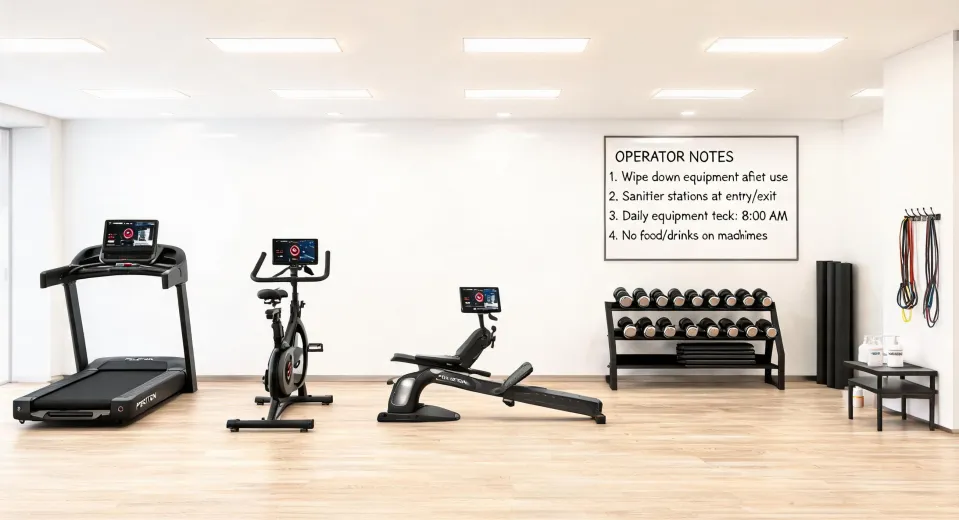
If you're buying Peloton equipment for a hotel or apartment gym, the most important decision isn't the bike itself—it's the peloton app login process. Hardware gets the attention, but the experience gets judged on whether a guest can get into a class without calling the front desk. The single biggest driver of ROI on connected fitness equipment is how many guests actually use it. In six years of handling fitness equipment orders, I've made 11 documented mistakes totaling roughly $22,000 in wasted budget. Most of that waste wasn't from bad products; it was from bad planning. This article is the checklist I now use, plus the failures that built it.
If you only read one section, read the checklist near the end. The rest explains why each item is there.
Why I'm qualified to warn you
I'm the operations lead for a 2,100-unit residential portfolio. My job is to make sure the amenities don't just look good in photos—they have to work, stay within budget, and actually get used. I'm not a personal trainer, so I can't speak to exercise science in detail. What I can talk about is procurement, installation, and what happens after the equipment arrives.
I also know what happens when you ignore the boring parts. In the 2023 renovation, everyone told me login friction matters. I didn't listen, and we watched a $30,000 bike installation sit idle for two months. It wasn't the hardware; it was the workflow. Guests couldn't figure out how to create a profile on the shared screen. That failure changed our buying process.
The real cost of Peloton in a B2B gym
The headline price of the equipment is a small part of total cost. Shipping, white-glove installation, network upgrades, commercial membership, accessories, and maintenance add up. Based on quotes we received from Peloton's commercial team in early 2025, a Bike+ unit with commercial membership can land around $4,500 to $5,500 per unit. I'd take that as a planning number, not a quote. Verify current rates with your Peloton commercial rep before budgeting.
But the hidden cost is usage failure. A $5,000 bike that is used 20 times in a year is worse than a $1,500 walking pad that is used 200 times. So when I evaluate equipment, the first question isn't 'Is it premium?' It's 'Will people actually use this after week three?' In a hotel gym, operational efficiency is as important as the brand on the equipment.
Also worth noting: according to Peloton's Q4 FY2024 shareholder letter, connected fitness subscriptions remained above 3 million—so this isn't a short-lived trend. But the ecosystem's popularity doesn't automatically fix your local login problem.
The peloton app login problem nobody budgets for
If you buy connected bikes, rowers, or treadmills, you need an answer to the peloton app login question before you sign the PO. Who creates guest accounts? Is it a generic building account or individual profiles? How does a guest reset a password? If you don't define that, your front desk becomes tech support. In our case, we solved it with a QR code mounted next to every screen that links to a one-page setup guide. That change lifted usage by about 30% based on our equipment logs. Not a scientific study, but impossible to ignore.
Why you should add a rowing machine
The most underrated piece in a hotel gym is the rowing machine. According to the American Council on Exercise (acefitness.org), rowing exercises about 86% of the body's muscles and is low-impact. That matters for travelers: they're tired, maybe sore, and not looking for a high-impact bootcamp. A rower gives a high-reward workout with lower joint stress. Plus the Peloton rowing classes are shorter and more instructional than I expected, which means less time teaching guests how to use it.
For a quick summary of the benefits of rowing machine in a hospitality setting: high calorie burn per minute, low impact, and small footprint.
Dumbbells matter more than you think
We bought the peloton dumbbells set for a dedicated strength corner. I wasn't expecting much—dumbbells are dumbbells. But the set integrates with the app's programming, and the app has a deep library of 10-minute dumbbell workouts for arms. Search the Peloton app for dumbbell workouts for arms and you'll find dozens of options. In month three, the dumbbells were the most-used equipment in the gym. Our mistake was buying one set and assuming it was enough. We ran out of pairs on day one and had to order a second rack, which cost about $1,400 more than we'd budgeted.
Walking pad vs stationary bike: what actually changed my mind
The walking pad vs stationary bike question comes up more often than you'd think. If you're trying to keep costs down, a walking pad is cheaper and doesn't require a login. But it's a different category: it's for movement, not necessarily for a workout. A Peloton stationary bike gives you the screen, the class, the progression, and the community. If your guests are business travelers who want to walk while they answer email, a walking pad might be the right call. If they want a guided workout that makes them feel like they did something, the connected bike wins. In a high-traffic hotel gym, I'd argue the connected bike is the better investment because it removes the 'what do I do for 30 minutes' problem. In a small corporate office where people are just trying to stay active, a walking pad is enough and easier to maintain.
The checklist I use now
Here's the checklist that has caught 47 potential errors in the past 18 months. It's not exotic. Every point came from a real mistake.
- Define the peloton app login flow before you order. Decide on guest accounts, generic profiles, password resets, and whether front desk staff are trained. Write it down.
- Check network bandwidth in the gym area. Streaming classes can buffer or drop if the wifi is weak. Confirm the access point covers the equipment zone, not just the lobby.
- Verify power and clearance. Equipment placement matters more than aesthetics. A bike in the sun with no outlet is a problem.
- Buy dumbbells in the weights people actually need. The peloton dumbbells set is great, but think in ranges: pair sets for expected demand. One full set may not be enough.
- Include maintenance in the budget. Pedals, seat bolts, screens, and software updates all need attention. If you don't have staff for this, consider a commercial service contract.
- Create a 30-day usage plan. How will guests learn about the rower, the dumbbell workouts for arms, and the bike? A QR code flyer is not a strategy.
When I skip one of these, I see it in the usage numbers and the repair tickets. When I follow them, I don't get excited calls about the amazing equipment—because it becomes normal, which is exactly what you want.
When Peloton isn't the right answer
I don't think every gym needs Peloton. Actually, I'd argue a traditional free-weight area and a good treadmill still outperform connected equipment in terms of versatility. Peloton works best when you have a space that can be self-serve and a guest population that wants structured instruction. If your team has no ability to manage logins or troubleshoot screens, the equipment will frustrate everyone. In that case, a non-connected approach may deliver better results with less operational friction.
Honestly, I'm not sure why some walking pads break faster than others. My best guess is it's a low-margin category and durability is the first thing sacrificed. I'd recommend buying from a vendor with a real warranty and not just the cheapest price.
So if you're starting from zero, don't start with a Pinterest board. Start with your front desk, your wifi, and your login policy. It sounds less exciting, but trust me—it's what keeps the machines moving.