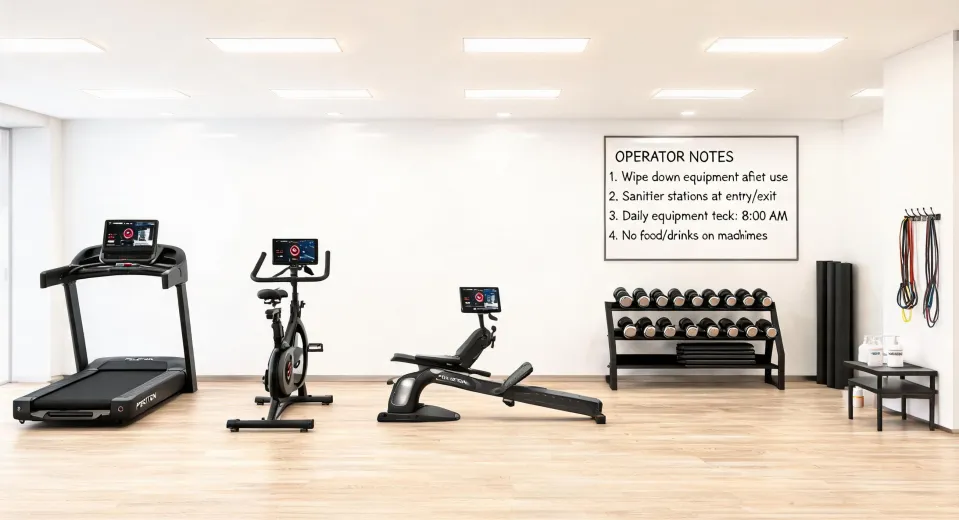
I've been the guy who handles fitness equipment orders for a corporate gym since 2017. In that time, I've personally made and documented 14 significant mistakes—totaling roughly $15,000 in wasted budget. Now I maintain our team's procurement checklist to stop anyone else from repeating my errors.
Here's the thing: there is no one-size-fits-all Peloton setup. Whether you're buying a Peloton bike for your living room or outfitting a hotel's fitness center, the right answer depends on your situation. I learned this the slow way. In my first year, I assumed the lowest quote was always the best decision. That mental shortcut cost me more than any other.
So let me break it down the way I wish someone had done for me early on. Three scenarios. No fake universal answer.
Scenario 1: You Just Want a Bike and Want to Save Money
When I first ordered equipment, I thought saving money meant buying the cheapest stationary bike I could find. In 2019, we bought three budget spin bikes alongside our Pelotons. They looked fine on the showroom—basically the same silhouette at a third of the price. But within nine months, two had resistance knob issues and one developed a noisy belt. We spent $600 on repairs, and guests actively avoided them. That initial $900 savings turned into a $1,500 problem, not counting the lost goodwill.
Now? I tell everyone to consider a used Peloton. If you're searching for a peloton exercise bike for sale, don't ignore the secondhand market. We've bought two used bikes at 40% off retail, and they've performed flawlessly. But check the frame and screen carefully. My rule: value over price, always. The cheapest option rarely is the best deal once you factor in reliability and resale.
Scenario 2: You're More Into Strength Training and Have Limited Space
People keep asking about a "peloton kettlebell." Honestly, I understand why—Peloton's strength classes are fantastic, and kettlebells are a natural fit. But as of 2025, Peloton still doesn't make kettlebells. They never have. What Peloton does have is a Strength+ app that works with any equipment you already own, including kettlebells and dumbbells.
Here's where I screwed up. I bought eight cheap fixed-weight dumbbells thinking I'd cover every possible exercise. Then I discovered the dumbbell row—a simple, brutally effective movement that needs a heavy weight, like 30 to 50 pounds. My 10-pound dumbbells were useless for that. I ended up spending more on a set of adjustable dumbbells and a single kettlebell. That changed everything. If you're in a cramped apartment, one good adjustable pair beats a dozen cheap singles every time. That's the value lesson again.
Scenario 3: You Want the Full Immersive Class Experience
The bike's built-in speakers are okay, but not great for experiencing Peloton's high-energy live classes. You'll want a solid pair of wireless headphones. This is where I went back and forth for weeks. My main options were Jabra headphones and Beats.
A quick note for anyone wondering who makes beats headphones: Apple has made them since 2014. They have that punchy, bass-heavy sound. But if you're like me and wear glasses, fit matters more than brand. Jabra's Elite series has a transparency mode that lets you hear the instructor clearly while still hearing the room. That's important in a gym setting when a member might tap your shoulder for help. I first bought a pair of no-name wireless earbuds because they were $30. They kept cutting out—terrible latency, constant disconnects. I replaced them with a used pair of Jabras. They cost four times as much, but two years later they're still solid. (Should mention: I'm not affiliated with either brand; just sharing what worked.)
How to Know Which Scenario You're In
So how do you decide? Ask yourself three questions:
- What's your primary goal? If you want cardio and a low spend, scenario 1. If strength variety matters more, scenario 2. If the live-class energy is the draw, scenario 3.
- How much space do you have? Bigger room? A bike or treadmill is fine. Tiny space? Prioritize strength tools like adjustable dumbbells.
- What's your tolerance for maintenance and risk? A used Peloton can save you a ton, but it comes with risk. Per FTC guidelines (ftc.gov), any seller's claims about a product must be truthful and substantiated. So when a listing says "like new" but the seller can't provide a video of the screen working? Walk away. We got burned once on a bike with a factory-reset screen that locked out the user. That's a $400 mistake on top of the purchase price.
In the end, "best" is context-dependent. But one thing is universal: value always beats price. My checklist now starts with your constraints, then finds the most reliable tool that fits within them. Nothing should be bought on sticker price alone.
I wish I'd known all this back in 2017. If you're about to make a Peloton decision, I hope this saves you from repeating the same costly errors. If you've had a similar experience, I'd love to hear about it—mostly so I can add it to my prevention list. I've caught 47 potential errors with our current checklist, but the list is never done.