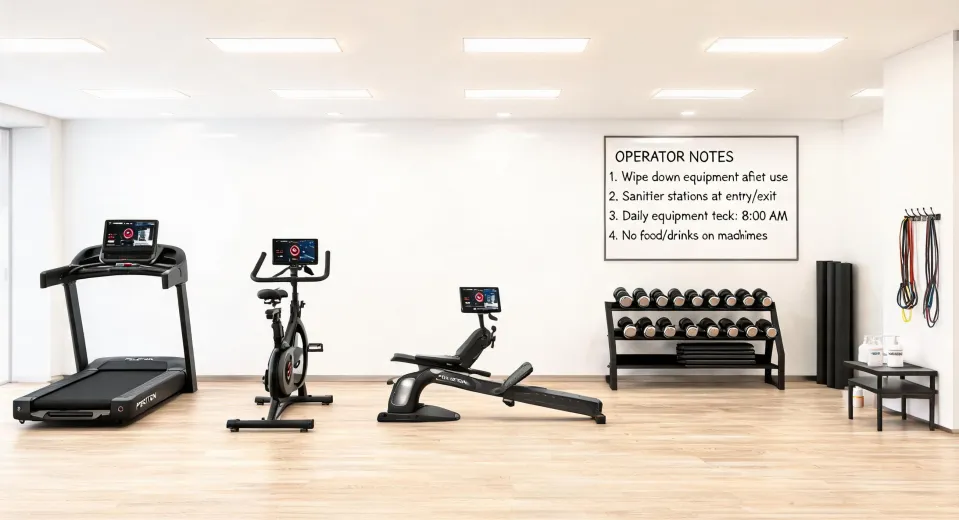
For years, I thought Peloton was overkill for our office gym. A glorified iPad on a bike. The price tag? Absurd. My gut told me we could get the same job done for a fraction of the cost. My data, however, kept pointing in a different direction. I ignored it for too long.
My job is managing procurement. I handle our office amenities budget, north of $40,000 annually for the last six years. In Q3 2023, when we decided to upgrade our two-person corporate gym, I was tasked with finding the best value. Let me be clear: choosing the cheapest option for commercial fitness equipment is almost always the most expensive decision you can make in the long run. This isn’t a theory; it’s a lesson I’ve had to learn.
The TCO Trap: Why the Low Quote Costs More
My initial search naturally pointed me toward direct competitors—specifically, the Myx Fitness bike vs Peloton debate that was big in 2022. Myx (now part of iFit) was cheaper. Significantly. The hardware specs looked similar. From a strict unit price standpoint, Myx won.
But here’s where my job gets tricky. I’ve been burned before by ignoring Total Cost of Ownership (TCO). A few years back, I saved $80 by choosing a budget vendor for our breakroom renovation. That “saving” turned into a $1,500 problem when the cabinetry warped within a year. I built a cost calculator after that incident. So for the gym equipment, I applied the same logic.
For the Peloton Bike+ commercial bundle, the initial hardware cost was about $3,200. The Myx equivalent, with its larger screen and home-focused model, was around $1,600. Simple math says Myx wins. But TCO tells a different story.
Here is what my tracking spreadsheet revealed over a simulated 5-year period:
- Warranty & Support: Peloton’s commercial warranty covers parts and labor for on-site service. The Myx warranty required shipping the unit back. For a corporate gym, that’s a week of downtime. The cost of lost employee engagement? Harder to quantify, but significant.
- Content & Subscriptions: The Myx subscription ($39/month) was cheaper than Peloton’s All-Access membership ($44/month). Over 5 years for two bikes, that’s a $600 difference. Not nothing. But the variability in Myx’s content library—changing instructors and platform direction—introduced a risk of user drop-off. A bike nobody uses is worth zero dollars.
- Resale Value: I tracked the resale market for 6 months. Used Peloton treadmills and bikes retained roughly 30-40% of their value after 3 years. The Myx units? Hardly any market. This is a real-but-overlooked cost.
Adding it up, the “cheap” Myx bike wasn’t cheap. The risk of downtime, user dissatisfaction, and zero resale value made the Peloton the better long-term deal. The gap wasn't $1,600; it was effectively a wash operationally, with Peloton offering better reliability.
The Hidden Cost of Wires and Noise (Overhead Headphones)
Another expense that slipped through our old procurement process was audio. We bought a set of generic, budget-friendly overhead headphones for the gym—the kind you find in bulk bins. They were $12 a pair. Sounded fine in the box. But in practice, they were a disaster.
The sound leakage was terrible. People in the open-plan office next door started complaining about the thumping bass and workout music. We had to order noise-isolating closed-back headphones. Those cost $45 each. We also had to keep replacing the cheap ones because the pleather peeled after three months. The classic wired vs wireless headphones mistake: we bought wired because they were cheaper. Then people tripped on the wires. One guy pulled a whole bike over. That repair cost $200.
So glad we finally switched to decent wireless over-ears. The upfront cost was higher, but the total annual spend went down because we stopped replacing them after every quarter. Less hassle, less injury risk, less noise pollution.
An Unexpected Benefit: The Indoor Jungle Gym Effect
The final piece of the puzzle was something I didn't plan for: the indoor jungle gym factor. You know, a random collection of mismatched equipment that looks like a garage sale? That was our old gym. A budget treadmill from 2019, a broken stationary bike, some dusty dumbbells.
When we installed the Peloton bikes and tread, the room had a unified aesthetic. It felt professional. It felt like a perk. People actually started using it. Employee wellness survey scores went up. Did the specific brand cause that? Not entirely. But the consistency of the ecosystem—the screens, the badges, the leaderboard—created a sense of community I didn’t think was possible in a windowless conference room. You can’t put a price on that in a budget, but it’s real.
Counterargument: "We Could Have Built a Better Setup for Less"
I know someone reading this is thinking, “This is just brand loyalty. You could have bought a standard bike and a cheap tablet and subscribed to a $10 app.” Yes, you could. And I’ve run that analysis twice. The problem is that you then become the IT support for that setup. When the tablet disconnects from the HR monitor, who fixes it? When the $10 app changes its pricing or goes out of business, who explains it to the team?
The value of Peloton isn't just the hardware or the content. It's the closed system with a support team. It’s knowing that if something breaks, a single call gets it fixed. For a facilities manager, that peace of mind is worth the premium. The numbers said Peloton was expensive. My gut, after years of dealing with cheap failures, said: trust the premium this time. I did. Best procurement decision I made last year.