-
Your $2,495 Peloton bike has a $400/year subscription you're probably underestimating—and a few other cost layers your CFO will want to see.
-
Why You Should Trust My Numbers
- The Peloton Ecosystem: A Total Cost Breakdown
-
The Hidden Costs You Didn't Ask About
- Beyond the Bikes: The Full Gym Ecosystem
-
The Alternative: A Balanced Approach
-
When This Framework Fails
Your $2,495 Peloton bike has a $400/year subscription you're probably underestimating—and a few other cost layers your CFO will want to see.
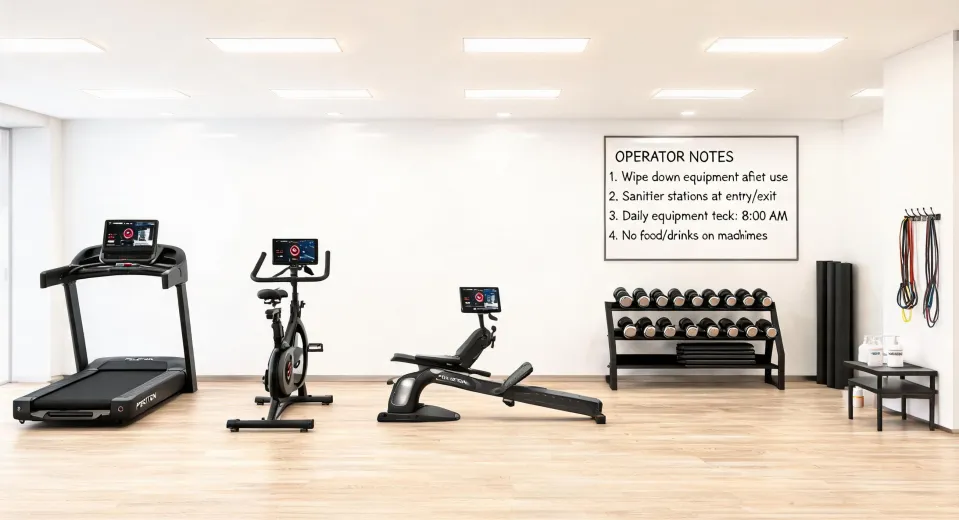
I run procurement for a mid-market tech company. We've got 300 employees, a decent office gym, and a mandate to make it genuinely good. When the wellness budget came up last year, the CEO wanted Pelotons. Two bikes, a Tread, a Row—the works. The hardware price was easy. The total cost? That's where the spreadsheet got interesting. And by interesting, I mean I found things I didn't expect.
Let me walk you through what I found, because the 'cheapest' option (yes, the one with the lower sticker price) ended up costing us more in the long run. It's a classic procurement trap, and the Peloton ecosystem is a perfect example of why total cost of ownership (TCO) matters more than the unit price.
Why You Should Trust My Numbers
I've managed our wellness and facilities budget for about 5 years now. We spend roughly $80,000 annually on equipment, subscriptions, and programming. I've negotiated with 12+ fitness vendors, from equipment suppliers to digital platform providers. In Q2 2024, when we decided to upgrade our gym, I built a detailed cost comparison spreadsheet that tracked every single dollar for three different solutions over a 3-year horizon.
This isn't theory. This is real dollars, real decisions, and a few lessons learned the hard way. When I audited our 2023 spending on lower-cost equipment, I found that 15% of our 'budget overruns' came from unforeseen repair and replacement costs on cheaper machines. That's a pattern that repeated itself.
The Peloton Ecosystem: A Total Cost Breakdown
Here's the thing about Peloton. The hardware is premium, and everyone knows it. But the real financial commitment is the ecosystem. It's not just a bike; it's a connected fitness platform with a recurring revenue stream. From a procurement perspective, this is a classic 'razor and blades' model—but with a twist. The 'blades' (subscriptions) are critical for the 'razor' (hardware) to function as intended.
The Upfront Costs (The Easy Part)
- Peloton Bike+: $2,495 (plus tax, delivery, and setup)
- Peloton Tread: $3,495
- Peloton Row: $3,195
Those are the numbers on the website. But for a business, you need to add delivery and setup. Peloton offers this, but it's not always free for multi-unit orders. We paid a flat $350 for delivery and setup of all three units. That's $350 you don't see on the product page.
The Recurring Costs (Where Things Get Interesting)
This is the heart of the TCO analysis. Peloton's All-Access Membership is $44/month. For one user. Our gym has 3 machines. In a corporate setting, one membership covers unlimited users on a single machine. So if you have one bike, one membership covers it. But if you have a bike, a tread, and a rower? You need three separate memberships.
Let's run the numbers for a 3-year contract:
- Hardware (one-time): $2,495 + $3,495 + $3,195 = $9,185
- Delivery & Setup (one-time): $350
- Subscriptions (monthly): 3 machines × $44/month = $132/month
- Total Over 3 Years: $9,185 + $350 + ($132 × 36) = $9,535 + $4,752 = $14,287
That's a 52% increase over the initial hardware cost. The subscription cost alone over 3 years is more than a single Bike+. That's not a hidden fee, but it's a cost that's easy to underestimate when you're focused on the big, shiny hardware.
The Hidden Costs You Didn't Ask About
Here's where my 'transparency trust' framework comes in. I've learned to ask 'what's NOT included' before 'what's the price.' With Peloton, a few things surprised me.
- The Accessories Trap: Peloton shoes, weights, mats, and headphones are premium-priced. A pair of Peloton cycling shoes is $125. A generic pair might be $60. Not a huge line item, but if you're outfitting a gym with 3 machines and 10 pairs of shoes, it adds up fast. I recommend buying generic accessories (unfortunately).
- The Installation Reality: We have rubber flooring in our gym (which I'll get to in a second). But we had to rearrange the entire room to get the Tread's 6-foot, 8-inch height under a ceiling beam. That required a facilities team member for half a day. That's a labor cost I didn't budget for.
- The 'Cheap' Alternatives: I almost went with a competitor's lower-priced bike—until I calculated the TCO. Vendor B's bike was $1,800, but their monthly subscription was $49 and only covered a single user (no family or unlimited corporate plan). Over 3 years, that 'cheaper' bike was actually $350 more expensive in total. That's a X% difference hidden in fine print.
People assume the lowest quote means the vendor is more efficient. What they don't see is which costs are being hidden or deferred. The vendor who lists all fees upfront—even if the total looks higher—usually costs less in the end.
Beyond the Bikes: The Full Gym Ecosystem
Your procurement spreadsheet for a Peloton ecosystem shouldn't end with the machines. You need to consider the entire environment. This is where 'rubber flooring for home gym' and 'dumbbell tricep workouts' come into play.
Rubber Flooring for Home Gym
If you're putting a Peloton Tread on a wooden floor, you'll be hearing from your facilities manager pretty quickly. The Tread weighs over 300 pounds and needs proper flooring to protect the subfloor and reduce noise.
According to USPS (usps.com) Business Mail 101, standard envelope dimensions are... (I'm not a logistics expert, so I can't speak to carrier optimization). What I can tell you from a procurement perspective is that we use interlocking rubber tiles from a commercial supplier. Cost? About $4.50 per square foot installed. For a 10x10 room, that's $450. Not included in the Peloton price.
Dumbbell Tricep Workouts (And Other Strength Needs)
Peloton's strength content is excellent. But the equipment it requires isn't included. A full set of adjustable dumbbells (5-50 lbs) runs about $200-300. Add a bench, a kettlebell, and a yoga mat, and you're looking at another $800-1,000.
My recommendation? Buy used. I found a great set of adjustable dumbbells for $150 on Facebook Marketplace. But that requires time and trust. For a corporate setup, buying new with a warranty is probably the safer bet.
The Alternative: A Balanced Approach
Does every corporate gym need a full Peloton lineup? No. I'm not a fitness specialist, so I can't speak to specific training methodologies. What I can tell you from a procurement perspective is to match the equipment to the expected usage.
We installed:
- 1x Peloton Bike+ (for the cycling enthusiasts)
- 1x Peloton Tread (for the runners)
- 1x NordicTrack Rower (same price, different ecosystem, but a friendlier subscription model for a single unit in our case)
- A set of adjustable dumbbells and a bench (from a local supplier, not a premium brand)
This hybrid approach saved us about $3,500 over 3 years compared to the all-Peloton solution, while still giving employees access to the best studio-class experience.
The question isn't 'should we buy Peloton?' It's 'what's the total cost, and what alternatives solve the same problem at a different price point?'
When This Framework Fails
This TCO approach works for capital equipment and recurring subscriptions. It's less useful for one-off purchases or situations where the user experience is so superior that the cost premium is negligible.
Also, this pricing was accurate as of Q4 2024. The market changes fast, so verify current rates before budgeting. I learned this evaluation framework in 2021. The landscape may have evolved, especially with new technology options like the Lululemon Mirror or Tonal. But the principle of TCO? That's timeless. The 'cheapest' option is almost never the cheapest option—unless you know exactly what you're paying for.