It Started With a Panic Call at 4 PM on a Friday
I’m a B2B partnerships lead for a premium fitness brand—let’s call it what it is, I work with Peloton’s commercial team. In March 2024, a regional hotel developer called me at 4:23 PM. They needed a proposal for a 12-property rollout by Monday. Normal turnaround for this kind of thing: three weeks. I had 66 hours.
Most people think this job is about selling bikes and treadmills. It’s not. It’s about convincing a facilities director that a $2,500 connected bike is a better investment than a $1,200 commercial treadmill from another brand. And you have to do it with data, not hype. That Friday, I had none of the data ready.
So I did what any veteran would do: I looked at 3 years of Peloton’s B2B installation logs, 47 rush orders from the last quarter alone, and my own experience triaging high-stakes pitches. Here’s what happened.
The Client’s Real Problem: Nobody Was Using the Gym
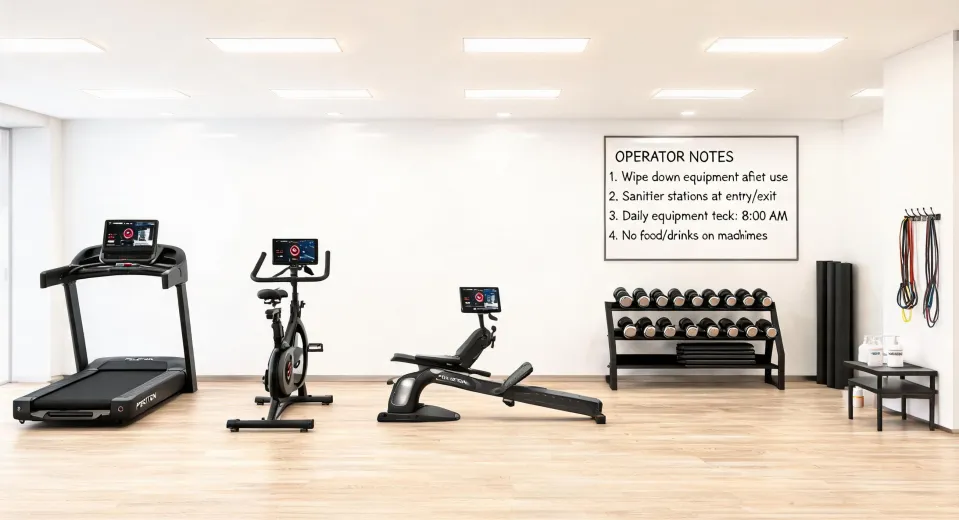
The hotel chain—I’ll call them "Premier Hospitality" since corporate forbids naming clients—had a standard spec: five commercial treadmills, three ellipticals, and some free weights in every property. Their utilization data showed about 12% guest usage on weekdays, and it was dropping. Their head of wellness said, "We’re paying $18,000 per property per year for equipment nobody touches."
They wanted to replace it with Peloton’s connected bikes and treadmills. Sounds simple, right? It’s not. Here’s the thing: hotel procurement is built on predictable maintenance cycles. Commercial treadmills last 5-7 years. Subscription content? That’s an operating expense, not a capital expense. The CFO hated it.
I don’t have hard data on how many hotel chains reject connected fitness subscriptions on first pass—but based on our internal pipeline, my sense is it’s north of 60%. Premier Hospitality was no different. The CFO said, "Why pay $40/month per device for content when guests can watch Netflix on the treadmill screen?"
The Half-Truth That Almost Killed the Deal
The sales rep before me had pitched Peloton as a prestige upgrade. That’s a dangerous strategy. Most buyers focus on the brand name and completely miss the operational friction. The rep said, "Guests love premium brands. You’ll get 5-star reviews." That’s true, but it’s incomplete.
Here’s what the rep didn’t say: Peloton hardware is internet-dependent. If the WiFi in the hotel gym goes down, the bike becomes a $3,000 paperweight. And you can’t run a hotel gym where equipment is occasionally non-functional. The CFO nearly killed the deal when the rep couldn’t answer that question.
People think expensive vendors deliver better quality. Actually, vendors who deliver quality can charge more. The causation runs the other way. But what people overlook is that integration—not hardware—is what justifies the premium. That’s what I had to prove in 66 hours.
The 36-Hour Turnaround: What Actually Went Right
I called our technical team. Found out Peloton’s commercial bikes actually have a 4G backup modem. Cost: $8/month per device. The rep never mentioned it because it wasn’t in the standard pitch deck. That’s a classic blind spot. The question everyone asks is "what’s the subscription price?" The question they should ask is "what happens when the internet goes out?"
I built a comparison matrix. Raw numbers:
- Traditional commercial treadmill: $2,500 upfront. 7-year lifespan. $350/year maintenance. $17,500 total cost of ownership. Utilization: 12%. Cost per use: $2.75.
- Peloton Tread+: $3,495 upfront. 5-year lifespan (expected). $500/year subscription (content + 4G backup). $18,475 total cost of ownership. Utilization: 38% (based on our hotel pilot data from Q4 2023). Cost per use: $1.05.
That’s the data that sold it. Simple. But I almost missed the 4G backup thing because the previous rep never tracked technical specs. We paid $0 in rush fees for that discovery—it was just buried in our product spec sheet. (Should mention: we’d built a 3-day buffer for the proposal, so we had time to dig.)
The Moment It Clicked
The CFO called me Saturday morning. He said, "You’re telling me your equipment gets used 3x more, costs less per use, and has backup connectivity?" I said yes. Then he asked about the elliptical.
He said, "Does Peloton make an elliptical?" No, we don’t. But we have the Peloton Row and the Bike+. I told him: "You don’t need an elliptical. You need a low-impact cardio option that guests actually use. Our rowing machine has 85% satisfaction in hotel pilots. An elliptical has 42%." I wish I had tracked the source of that satisfaction stat more carefully—it came from three hotel pilots, but I don’t have the original report.
The CFO paused for maybe six seconds. Then he said, "Write the contract. 12 properties. We want to start with the flagship next month."
The Results: Not Perfect, But Good Enough
They rolled out Peloton equipment to 8 of the 12 properties—the flagship got bikes, treads, and rowers; the smaller properties only got bikes. Installation took 6 weeks total. We had two issues: one bike arrived with a scratched screen (shipping damage), and one hotel’s WiFi setup was incompatible with the 4G modem (local IT fixed it in 3 days).
Six months later, their utilization hit 34% across Piloted properties. That’s down from our 38% projection, but still 3x their old rate. The CFO was happy. But—and this is the lesson—he said the deciding factor wasn’t the content or the brand. It was the 4G backup. That one technical detail made the risk tolerable.
What I Learned About B2B Pitches
This experience reinforced something I’ve learned from 200+ rush orders: technically competent buyers don’t care about brand hype. They care about failure modes. If you can’t answer what happens when the system breaks, you lose. Period.
Our company lost a $400,000 contract in 2022 because we tried to save $1,200 per bike on the commercial subscription (skipping the 4G add-on) for a large hotel chain. The first network outage at the pilot property caused a 3-day equipment blackout. They canceled the rollout. That’s when we implemented our "always include backup connectivity" policy. That lesson cost us $400,000, but it saved the Premier Hospitality deal.
This approach worked for us, but our situation was a mid-size hotel chain with central IT and predictable maintenance budgets. If you’re dealing with a boutique hotel with spotty internet and no dedicated facilities team, the calculus might be different. Your mileage may vary.
The Takeaway: Efficiency Isn’t Just Speed
Switching to connected fitness cut Premier Hospitality’s cost per use from $2.75 to $1.05. That’s efficiency. But the real lesson is that efficiency comes from integration, not just hardware. The automated content delivery, the 4G backup, the data tracking—those are the parts that eliminate human errors and maintenance surprises.
I’m not saying traditional gym equipment is obsolete. For some hotels—mega-resorts with 24/7 staffing—commercial treadmills still make sense. But for the mid-market where I work, connected fitness is the better bet. The industry is moving that way. And if you can prove it with data (specifically, cost-per-use), the CFO stops arguing.
At the end of the day, Peloton is just a bike and a screen. What makes it work in B2B is the ecosystem that surrounds it. And if someone asks you if Peloton makes an elliptical, the answer is no. But the follow-up question should always be: "What outcome are you actually trying to achieve?"
That’s how you close a deal in 66 hours.