Why I stopped trusting the unit price on a quote sheet
I'm the procurement manager at a family entertainment company with five locations across the Northeast. I've managed roughly $290,000 in annual equipment spending for the past eight years, negotiated with 60-some vendors, and logged every invoice in our cost tracking system. Boring job? Maybe. But it's taught me a few things about what a dollar actually buys you in this industry.
In 2023, we renovated the game room at our Rochester location. Six 8-foot commercial pool tables, two ping pong setups, and a small fitness corner. The table order was the big-ticket item. I pulled quotes from 14 vendors. Olhausen's Waterfall line came in at about $4,100 per table. Two budget brands quoted roughly $2,800 for comparable-looking specs.
That's a $7,800 gap across six tables. If you only compared unit prices, the budget brands win by a mile. I've been burned by that logic before. So I opened the TCO spreadsheet we've been building since 2018 and compared Olhausen against the budget options across three dimensions. Some of the results surprised me.
Dimension 1: Upfront cost vs. three-year total
The olhausen waterfall pool table for sale pricing I found ranged from $3,900 to $4,300 depending on cabinet and felt options. Budget alternatives clustered around $2,600 to $3,000. On paper, that's a 30 – 35% premium.
But here's what a quote sheet doesn't show you: felt replacement frequency. Our commercial volume—roughly 6 – 8 hours of daily play on weekends—eats through felt fast. Budget tables typically need re-felting every 18 – 24 months. Olhausen's Accu-Fast surface held up closer to three years under similar use at our Buffalo location.
Do the math. Re-felting a table costs about $350 – $550 including labor. Over a three-year window, that's one extra re-felt for the budget table—call it $450—plus roughly $200 in extra leveling work because cheaper slate and frame components tend to shift more. Then there's revenue loss from downtime: each table out of commission for two weekends costs us about $480 in lost play revenue.
I ran the three-year TCO comparison for a six-table order:
- Budget tables: $16,800 purchase + $2,700 re-felting + $1,200 leveling + $2,880 downtime = $23,580
- Olhausen Waterfall: $24,600 purchase + $900 maintenance + $0 downtime (maintenance done midweek) = $25,500
The gap shrinks from $7,800 to under $2,000. And that's before resale value. Three-year-old Olhausen tables still move on the secondary market at 40 – 50% of new. The budget tables? They're essentially salvage.
This is the pattern I keep seeing. The olhausen waterfall pool table for sale price looks higher until you track what happens after month 18. In 2021, we bought three cheaper tables for a temporary pop-up location. Eighteen months later, two of them had surface depressions. Repair plus lost revenue wiped out the entire initial savings. That experience is why I rebuilt our TCO template from scratch in 2022.
Dimension 2: Weight as a quality signal (and an installation headache)
Olhausen pool table weight specs confused me at first. An 8-foot Waterfall runs about 850 – 1,000 lbs fully assembled, depending on slate and cabinet configuration. The budget alternatives landed around 500 – 650 lbs.
Most buyers treat that as a shipping cost. I used to as well. But weight tells you something about what's inside. An 800‑lb-plus table usually means 1-inch slate, solid wood frame components, and thick backing. A 550‑lb table is more likely using 3/4-inch slate and engineered wood or MDF in places where you can't see it.
Here's the blind spot: most facility managers compare felt color, cabinet style, and brand name. They skip the weight spec entirely. It's like buying kettlebell weights based on the color of the handle—you're ignoring the one number that tells you what you're actually getting.
For commercial use, 1-inch slate matters. It holds level longer between service calls and handles irregular play patterns better. I've seen budget tables develop dead spots within 14 months at busy venues. Not a warranty issue—just physics.
That said, weight costs extra on the logistics side. We paid about $110 – $140 more per Olhausen table for delivery and setup versus the budget quote. We also had to contract a structural review for our second-floor Albany location—$600 for the engineering assessment, because six 1,000-lb tables concentrated in one area required verifying the load path. That's a one-time cost, and our lease now specifies floor loading limits, but it's part of the real budget story.
Dimension 3: Play experience and the accessory trap
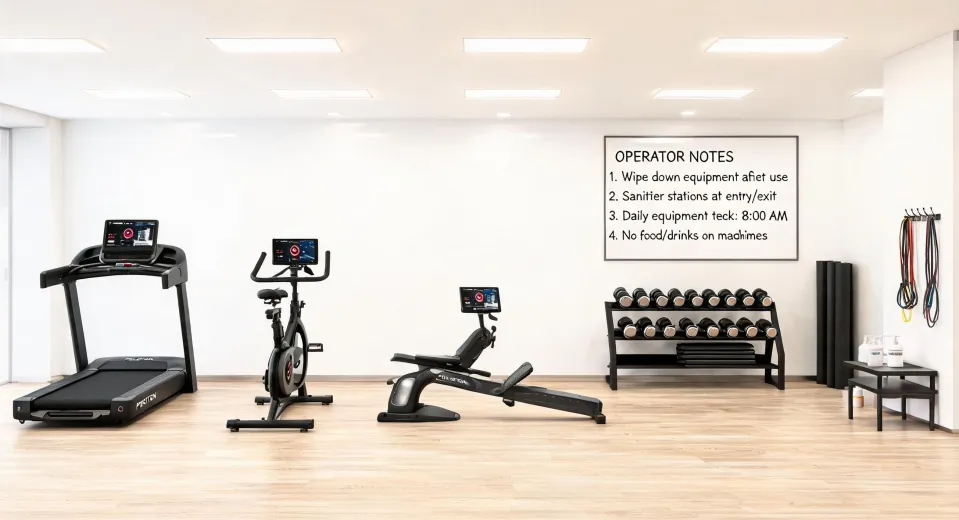
This one's less about the table itself and more about what surrounds it. Our Rochester renovation included ping pong tables and a small fitness corner (two seated leg press for glutes machines and a kettlebell rack). Every category had the same hidden-cost pattern: accessories and compatibility.
Take ping pong. The seemingly basic question of how to hold a ping pong paddle turned out to drive our equipment turnover rate. We initially stocked only shakehand-style paddles. Within four months, half were worn through—larger groups kept reverting to a penhold grip that put uneven pressure on the rubber. We switched to multi-grip paddles with replaceable rubber sheets. Annual savings: about $700, plus fewer replacements.
For pool, Olhausen's accessory ecosystem is standardized. Cues, racks, balls, and replacement parts fit across model lines and aren't locked to a single supplier. The budget tables we bought in 2021 had non-standard leg leveler sizes—it took three vendor calls and two weeks to find compatible replacements. That's the kind of hidden cost that never shows up in a quote comparison.
The fitness machines told a similar story. Our seated leg press units came from a general fitness brand with a closed service network. Any repair required their certified technician at $350 per visit. Olhausen tables, by contrast, can be serviced by any local billiards technician—we pay about $120 per maintenance call through our regular vendor. Different products, same principle: proprietary service networks quietly raise your three-year cost.
So which one should you buy?
I'm not going to tell you Olhausen wins every comparison. It doesn't. Here's the breakdown I gave my own team when we reviewed the Rochester order:
Go with Olhausen Waterfall if:
- You're running 5+ hours of daily play, including weekend peaks
- You plan to keep the tables for 4+ years and care about resale
- Your floor can handle 850 – 1,000 lbs per table with proper load distribution
- Customer perception of brand matters (a lot of players recognize Olhausen)
Consider a budget alternative if:
- The installation is temporary or lease-term is under two years
- Daily play volume is light—display or occasional use
- Your budget ceiling is hard-capped and re-felting in 18 months is acceptable
We ended up splitting the order: four Olhausen tables in the main hall, two budget tables in a back room with lighter traffic. The blended three-year TCO came within 4% of an all-Olhausen order, but the upfront cash outlay was about $5,200 lower—which mattered for our Q3 cash flow. Not the cleanest solution, but it's the one that fit our actual constraints.
One thing I'd tell anyone running this comparison: the weight spec and the accessory compatibility check are the two most overlooked items in every quote I've reviewed. They don't show up on the sticker price, but they're the first things that bite you at month 18.
Whether you're buying an 8-foot Olhausen or comparing kettlebell weights for a fitness room, the logic is the same. The quote tells you what you pay today. The TCO tells you what it actually costs. Only one of those numbers matters when the budget review comes around.