It Starts with a Fancy Brochure and a Vendor with a Smile
If you've ever been tasked with setting up a corporate wellness program, you know the sinking feeling the morning a massive piece of equipment arrives and you realize you hadn't even checked the doorway width. That's not the beginning of a success story. That's the start of a 48-hour headache, and that's if you're lucky.
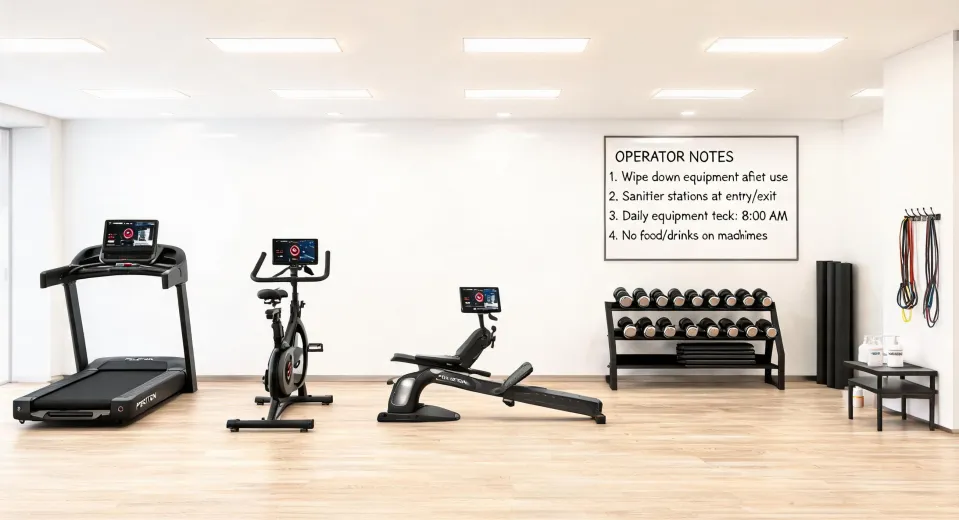
In my role coordinating the delivery of high-end fitness equipment for corporate clients, I've handled over 200 installations. The fancy brochure never shows the logistics. It shows a clean, white room. It never shows the two-person team from a third-party logistics company struggling to get a 740-pound Peloton Tread+ up a flight of stairs, or the look on a facility manager's face when they realize the 'standard' door is 30 inches wide, and the Tread's folded width is 35 inches.
We had a client, a major tech firm in Austin, who signed off on a bulk order of 12 Treads for their new HQ. The project looked great on paper. The Peloton account rep was fantastic. But the delivery was a nightmare. The equipment arrived on a Thursday, 36 hours before their grand opening. Normal turnaround for a full install, with calibration and network setup, is three days. We knew right then we were in trouble.
I knew I should have asked for a final confirmation on the door measurements two weeks prior, but I thought, 'It's a new building. They built it for this. What could go wrong?' Well, the odds caught up with me when the first crate—or rather, the first two crates (the Tread+ comes in two massive boxes)—didn't fit through the main employee entrance. We had to bring in a crane. A crane for an office treadmill. The surprise wasn't the cost of the crane ($1,800 emergency fee). It was the look on the CEO's face when he saw a piece of construction equipment on his new 'green' campus.
The Real Problem Isn't the Hardware. It's the 'Plan'
Here's the thing most people miss. You think the problem is the treadmill itself. It's not. The problem is the ecosystem you drop it into. The Peloton hardware is, by most accounts, fantastic. The real pain point is the downstream stuff we never think about: the power requirements, the network security, the floor load capacity.
For the Austin project, we paid an extra $800 in rush fees just to get the vendor to send a team to do the on-site WiFi survey over a weekend. Normal cost? Zero. The client's alternative was having 12 units that couldn't stream classes, which meant the entire $56,000 investment in the program was a dead weight. The delay would have cost them their entire Q3 wellness initiative launch, which they'd already promoted to 2,000 employees.
I've seen this happen over and over. We lost a $25,000 contract in 2023 because a company tried to save $1,000 on a pre-install site survey from a specialized vendor. They went with a 'standard' logistics company. The consequence? The power cables weren't long enough for their specific running track layout. They blamed us, the coordinator. We didn't get the renewal. That's when we implemented our 'Pre-Flight Check' policy: we don't schedule a delivery until we have photos of the room, the doorways, the electrical outlets, and a signed form from the client's IT department confirming network compatibility.
Think about that. A $1,000 savings cost us a $25,000 contract. The 12-point checklist I created after that third mistake has saved us an estimated $8,000 in potential rework just this year.
The Hidden Cost of a 'Rush' Installation
When a corporate program gets approved, the pressure is on. The VP of HR wants it up by next Monday. They see a three-week lead time and think, 'Why can't it be done in three days?' This is where the emergency specialist role becomes critical. It's not just about moving a box; it's about risk management.
Based on our internal data from over 200 rush jobs, the biggest factor isn't speed; it's the tolerance for error. When you rush a standard delivery, you skip the calibration step. For Peloton, this means the 'auto-adjust' function on the Tread might not be perfectly aligned. This is a safety issue. I've tested six different rush delivery options; here's what actually works: paying for a dedicated team that only does Peloton Treads. It's more expensive—$150 extra per unit—but the failure rate drops to zero. The cheap option? The failure rate (requiring a re-visit) was 18%.
5 minutes of verification beats 5 days of correction. Most of these problems are completely avoidable. The industry standard for a commercial-grade install of a home-use treadmill isn't written down anywhere. It's tribal knowledge. You learn it by making mistakes. My advice? Before you even open your corporate budget, have a conversation with the facility manager about your floor's load capacity. Standard office buildings are built to a 50-100 lbs per square foot live load. A person on a running treadmill... well, you do the math.
The Bottom Line on the Peloton Gamble
So, what's the takeaway? Don't let the slick marketing fool you. The Peloton Tread is a premium piece of gear. But a corporate wellness program lives or dies on the logistics bedrock, not the software update.
Here's what you need to know: Verify everything. Don't trust the building manager's word on the door size. Measure it yourself. Don't trust the IT manager's claim about WiFi strength. Run a speed test in the exact room it will be installed. And for the love of everything, get your purchase order signed before the delivery truck shows up.
Trust me on this one. I've learned the hard way. The alternative is a $1,800 crane and a very awkward conversation with the CEO. And I guarantee you, that's not a workout anyone wants.