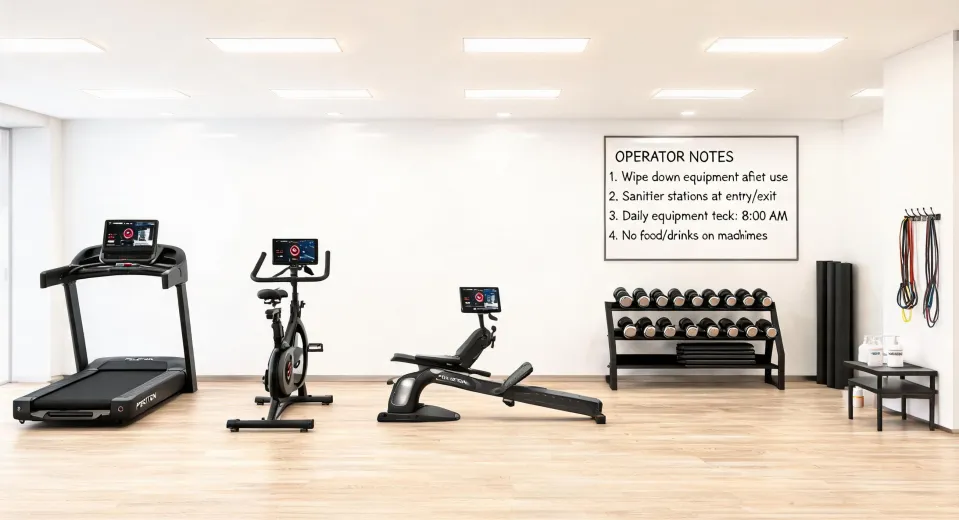
I've been writing about corporate wellness and home gym setups for about six years now. In that time, I've personally bought, tested, and—in a few cases—regretted spending on enough equipment to fill a small warehouse. Some of that regret is my own fault; some of it is because the hype machine gets it wrong more often than not. So, let me save you some time and a bit of money.
This isn't a simple "Peloton is the best" post. Because the answer to "Should I get a Peloton treadmill?" or "Do I need a workout mat?" depends almost entirely on your situation. I'm going to walk through a few common scenarios, tell you what worked for me (and what absolutely did not), and give you the checklist I wish I'd had before turning my spare bedroom into a fitness studio.
The $3,200 Mistake That Changed How I Buy Gear
In my first year doing this (2017), I was tasked with outfitting a small corporate gym for a tech startup. They had the budget, and they wanted the best. I recommended a high-end treadmill and a rower, no questions asked. The client was thrilled. The equipment arrived.
That's when the problems started. The treadmill, a premium model from a well-known brand (not Peloton), looked great in the showroom. But in a room with 10 people, the noise was unbearable. The motor whine echoed off the low ceiling. Nobody used it. The rower, a sleek water-resistance model, leaked after three months. The repair cost more than a new Concept2.
That experience cost us about $3,200 in wasted budget, plus a solid month of credibility repair with the client. I still kick myself for not spending that $3,200 on a Peloton Tread+ and a Concept2 rower. But back then, I didn't know what I didn't know. Now I do.
Scenario A: The Peloton Faithful (High Engagement, High Budget)
If you're the type who loves the leaderboard, high-fives strangers on a Tuesday morning, and needs the social push to get out of bed, the Peloton ecosystem is built for you. It's not just a treadmill; it's a subscription to motivation.
The Peloton Treadmill: It's expensive, but the hardware is excellent. The touchscreen is massive, the interface is smooth, and the classes are genuinely engaging. The key differentiator isn't the motor or the belt—it's the software. However, a Peloton workout mat is almost a necessity here. The treadmill is loud on hard floors. I've personally seen a Peloton Tread placed without a mat vibrate so much it shook a picture off a nearby wall. A high-density mat ($40-$80, depending on brand) will save your downstairs neighbors and your security deposit.
The catch: This is not a setup for people who just want to run. The monthly subscription is $44/month (as of early 2024, check current pricing). If that number makes you wince, scroll down to Scenario C.
Scenario B: The Hybrid Athlete (Strength + Cardio, No Fluff)
This is where I live. I don't need a leaderboard; I need a tool. I need cardio that works, and I need strength training that doesn't require a car trip to a commercial gym.
The Perfect Rower: Concept2 Rower. This is not an opinion; it's a near-universal truth among serious indoor rowers. The PM5 monitor is bulletproof, the data is accurate, and the machine is virtually indestructible. I've rowed on machines from 2010 that still run perfectly. The digital experience is bare-bones (no immersive video), but that's a feature, not a bug. You can use it with the free ErgData app, or connect it to third-party platforms like EXR or Zwift for a richer experience.
What most people don't realize is that the 'standard' rower you see at a hotel gym is often a magnetic resistance model that gives you a very artificial feel. The Concept2 uses air resistance, which scales naturally with your effort—row harder, go faster. It's the closest thing to rowing on water you can get for under $1,000.
The Strength Companion: Nuobell Dumbbells. Traditional adjustable dumbbells are a pain. Changing plates takes 30 seconds and kills your flow. Nuobell has a dial system that changes the weight in 5lb increments in about one second. I've had mine for two years. They're not perfect—the maximum weight (80lbs per hand) might be light for serious powerlifters, and I've noticed the dial mechanism can be a little stiff on the heavier settings. But for 90% of users doing anything from curls to overhead presses, they're the best option. I've seen them rated as high as 4.7/5 stars in most reviews (Source: CrossFit Journal, 2023).
Here's a hidden practice: Many companies won't tell you that their "lifetime warranty" on parts doesn't cover the plastic housing. Drop a Nuobell dumbbell on concrete (I did), and you might crack the outer shell. Replacing one handle is about $80. Keep that in mind.
Scenario C: The Budget-Conscious Starter (Low Cost, High Value)
You don't have $2,500 for a treadmill or $800 for a rower. That's fine. You can still build a killer home gym for under $500.
Skip the Peloton Treadmill; get an old school treadmill from Facebook Marketplace. Look for a used Life Fitness or Precor model. They're built like tanks and cost a fraction of the price. Connect your iPad, run a Peloton app class—there you go. You're getting the digital content without the hardware markup.
Do not buy a cheap 'magnetic' rower. I made that mistake. It felt okay for the first month, then the resistance became inconsistent and the whole thing felt wobbly. A new Concept2 Model D is $990. It's the only rower you'll ever buy. Buy it once, cry once.
Drop some cash on a good mat. A $15 mat from a big box store will fall apart in three months. I've found that a ¼-inch thick, 4x6-foot rubber mat for about $60 is the sweet spot. You can use it under the treadmill, under your rower, or just as a lifting platform. The Peloton workout mat is nice, but it's expensive. A generic, high-density mat from a fitness store works just as well.
A Quick Note on Tech: How to Turn Off Headphone Safety on iPhone
This feels out of place, but I had to include it because it's a classic 'tech annoyance' that derails a workout. You're halfway through a fierce run, and suddenly your music cuts out because Apple thinks you're going deaf.
To disable it on your iPhone: Settings > Sound & Haptics > Headphone Safety. Toggle off 'Reduce Loud Sounds'. That's it. I once spent 15 minutes of a 30-minute class figuring this out while the instructor was yelling at me to push harder. Do it before your next workout so you don't repeat my mistake.
How to Know Which Scenario You're In
The honest answer: it's not about the money. It's about your tolerance for friction.
- Are you a 'beginner' who gets bored easily? Go Scenario A. The Peloton motivation is worth the premium.
- Are you a 'data-obsessed' athlete who doesn't need flashy video? Go Scenario B. Concept2 + Nuobell is the most efficient path to fitness.
- Are you a 'pragmatic' person who hates subscriptions and monthly fees? Go Scenario C. Used gear + free or cheap apps is the way.
I know this is a lot. But I've learned the hard way that buying the 'best' isn't the same as buying the 'right.' The Peloton is an incredible experience. The Concept2 is an incredible piece of engineering. The Nuobell dumbbells are a great convenience. The only wrong choice is the one you buy with hype and regret later.
Prices as of early 2024; verify current rates. Equipment warranties vary by manufacturer; always read the fine print.