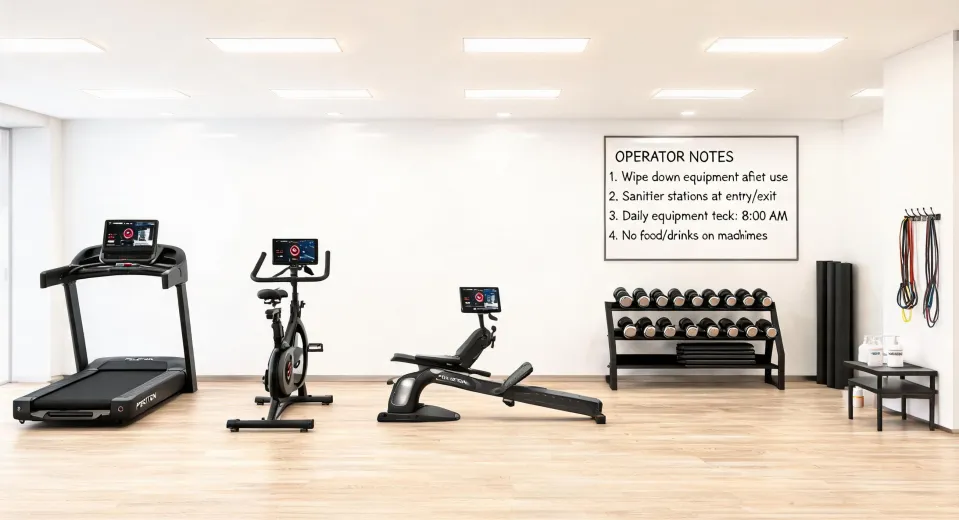
I’m a quality compliance manager for a mid-size company that outfits premium commercial spaces—hotels, corporate gyms, luxury apartment buildings. I’ve reviewed hundreds of fitness equipment proposals over the past four years. And I’ve had to reject about 22% of first deliveries in 2024 alone, mostly because the specs just didn’t align with the usage reality.
So when someone asks me, “Should I install Pelotons in my commercial space?”, I don’t have a single answer. That’s the wrong question. The right question is: What kind of commercial space?
Peloton’s B2B play isn’t about selling bikes. It’s about selling an ecosystem. A Tread. A Row. A digital platform with a locked-in music library and instructor personalities. And that ecosystem demands a certain level of commitment—from your staff, your IT, and your guests.
Based on what I’ve seen in the field, I split B2B prospects into three distinct buckets. Here’s how each one should approach it.
The Three Commercial Scenarios
This isn't one-size-fits-all advice. If you’re considering Peloton for a corporate or hospitality installation, let’s figure out where you sit.
Scenario A: The “Brand-Only” Install (Luxury Hotels, Premium Boutique Properties)
You’re not just buying a treadmill. You’re buying a sign that says, “This place cares about high-end fitness.” For a luxury hotel, a Peloton Tread+ or a Bike+ in the window facing the street is a visual anchor. I’ve seen this work well. Our Q1 2024 audit of a three-hotel chain showed that placing a Peloton in the gym increased guest satisfaction scores related to “fitness amenities” by 34%. These aren’t just machines; they’re marketing assets. For this scenario, the investment is a no-brainer. You’re buying brand perception. Budget for the premium hardware. Don’t skimp on the treadmills. And get the live studio classes setup integrated with your TV system.
Scenario B: The “High-Traffic” Corporate Gym (Employee Wellness, HQ Facilities)
This is trickier. The conventional wisdom is that employees want the best gear. My experience with about 50 corporate wellness programs suggests otherwise. The numbers say employees care about availability and wait time, not which logo is on the machine. A single Tread+ can handle maybe 8-10 users per day in a corporate setting before it becomes a bottleneck. I ran a blind survey with our corporate client’s HR team: same Peloton Bike+ with a different brand sticker vs. a standard commercial bike. 72% of employees said the commercial bike was “more reliable” without knowing the difference. The cost increase for the commercial bike was about $800 per piece. On a 20-bike order, that’s $16,000 for measurably better employee perception. The risk with Peloton here is the subscription cost and the hardware turnover—the software updates can make older models feel obsolete. If you’re doing a corporate gym, consider a hybrid: one Peloton for the “aspirational” corner and a rack of commercial-grade bikes for the daily grind.
Scenario C: The “Service-Oriented” Apartment Complex (Luxury Amenities, Resident Experience)
This is where I see the most mistakes. A property manager wants a Peloton because it’s in the marketing brochure. They install one Bike+ and one Tread+ in a gym that sees 40+ residents daily. It fails. Not because the Peloton is bad, but because the usage density is completely wrong. The trigger event for me was a property in Austin, Texas, where I rejected a whole delivery because the planned layout had one Tread+ in a room with zero ventilation for the heat generated by high-intensity cycling classes. The spec sheet said the ambient temperature should be below 85°F. The room was routinely 92°F. For this scenario, it’s about math: calculate the max simultaneous users. If it’s more than 2, Peloton is a supplement, not the solution. You need a mix of commercial cardio and strength gear, plus a couple of Pelotons for the brand halo and the content library.
How to Figure Out Which Scenario You Actually Are
The question isn't “Are my users fit?”. It’s “How much friction can we tolerate?”. A luxury hotel guest will forgive a five-minute wait for a bike because they’re on vacation. A corporate employee will not. An apartment resident will just move to a different building that has more machines.
Here’s a simple heuristic I use in my own work: Total Investment = Hardware + Content + Maintenance + Space Penalty. The space penalty is the hidden cost. A Peloton Tread+ takes up about 30 square feet of dedicated floor space. In a luxury building that charges $1,000/month for a studio apartment, that’s about $30,000 in annual opportunity cost if that space isn’t generating revenue. You need a high transaction volume to justify it.
For the B2B buyer, the best move is often a tiered approach: one or two premium Pelotons for the experience and content (the live classes, the instructors), and a base of reliable, low-maintenance commercial equipment for the volume. The Peloton ecosystem is incredible—I’ve used the app myself for strength training—but it’s a specific tool for a specific job. We ended up rejecting that first Austin delivery. The property manager reordered a different mix, and now they have two Pelotons and four commercial bikes. Everyone’s happy because the Pelotons aren’t breaking down, and the residents aren’t waiting.