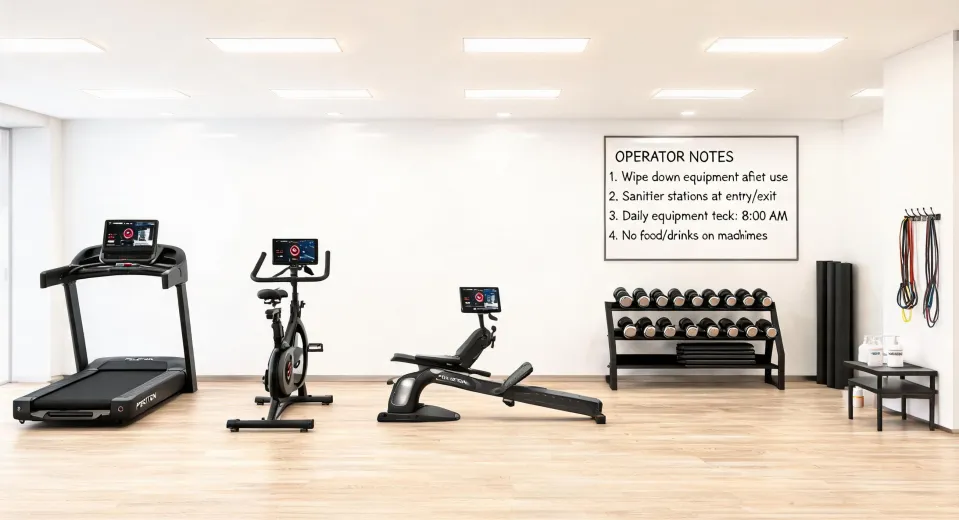
So you've got a Peloton Tread. Or you're thinking about getting one. And now you're wondering about a cover. Do you really need it? Will it help with noise? How much should you pay?
These are the questions I get from corporate clients setting up home gyms, from event planners needing to protect equipment, and from people who just want their expensive machine to last. I've dealt with enough rush orders for protective gear (ugh, the last-minute "the machine arrives tomorrow and we have nothing" calls) to have some practical thoughts. Here's what I've found.
1. Do I really need a cover for my Peloton Tread?
Short answer: It depends on where you put it.
If your treadmill is in a dedicated home gym that you keep clean and climate-controlled? You can probably skip the cover. I've seen machines that look brand new after 3 years without one.
But if it's in a garage, basement, or a room with pets, kids, or dust (which is most people, honestly), a cover is a solid investment. Treadmills are dust magnets. The belt, motor, and electronics all suffer when dust accumulates. And if you have a cat that thinks the running surface is a fun place to sleep? Yeah, you want a cover. (This was back in 2023 when a client's cat decided the treadmill was its personal throne. The hair cleanup was not fun.)
My rule: If you wouldn't leave a laptop sitting out in that room for months, cover the treadmill.
2. Will a cover reduce noise?
This is a common misconception.
People assume the cover will muffle the motor noise. The reality is, a thin vinyl or fabric cover won't do much for the sound coming from the machine itself. What it can help with is the sound of dust settling (not really a thing), or if you're worried about things falling on it and making noise—but that's a stretch.
If noise is your concern, focus on the mat underneath (for impact noise) and the machine's placement (away from walls). A cover solves cleanliness, not acoustics.
The question isn't "will it reduce noise?" It's "will it keep the machine clean?" Those are different problems.
3. What's the best material for a treadmill cover?
Most covers are made from either polyester or vinyl. Here's the difference from a practical standpoint:
- Polyester (fabric-type): Breathable, which is good for preventing moisture buildup. But it's less durable if you have pets or need to wipe it down frequently. I've had clients go through two polyester covers in a year because cats scratched them.
- Vinyl/Leatherette: Easier to clean (wipe with a damp cloth), more durable, but can trap moisture if the machine is still warm after use. (not that I'd recommend putting a cover on a hot motor anyway).
For most people, I'd suggest a breathable fabric cover if your environment is humid, or a vinyl one if you have pets or kids who will inevitably spill something on it. (The delay cost our client their event setup once—a spilled smoothie on an uncovered treadmill. Cover was ordered after that.)
Three things to check before buying: material breathability, fit (make sure it covers the console properly), and whether it has a storage pocket for the power cord. In that order.
4. How much should I spend on a Peloton Tread cover?
Official Peloton covers run around $60-$80. Third-party options on Amazon range from $25 to $50.
I'm not a pricing expert, so I can't speak to the exact markup from manufacturing. What I can tell you from a procurement perspective is this: The cheapest cover ($20 range) is often too thin and won't hold up. The $40-$50 range seems to be the sweet spot for quality. The $80 official one is fine but not dramatically better. (My experience is based on about 30 cover purchases for corporate gym setups. If you're looking for a single cover for home use, the $40 one will do just fine.)
Is the official Peloton cover worth it? It fits perfectly and matches the aesthetic. But functionally, a well-reviewed $40 third-party cover with the right dimensions will work just as well.
5. How do I clean my Peloton Tread cover?
Most covers are machine washable (check the label—surprise, surprise, some aren't). A gentle cycle with cold water, then air dry. Do not put it in the dryer, as the heat can warp any waterproof coating.
For vinyl covers, just wipe with a damp cloth and mild soap. Avoid harsh chemicals that can degrade the material.
I'd recommend cleaning it every 2-3 months, or more often if you have pets (ugh, the fur buildup).
One thing: Don't put the cover back on until the machine is completely cool. Otherwise, you risk trapping heat and moisture, which is bad for the electronics. (This was back in 2022 when a client stored their treadmill still warm from a workout and had issues with the display. The manual doesn't always mention this, but it matters.)
6. Can I use a regular treadmill cover on my Peloton?
Technically yes, if the dimensions match. But there's a catch.
Peloton Treads have a unique console shape—the big screen sticks up in the front. A standard "fits most treadmills" cover might not cover the console properly or might be too tight. I've only worked with Pelotons and similar high-end machines (circa 2024-2025), so I can't speak to how this applies to budget models. For a Peloton, I'd recommend a cover specifically designed for the Peloton Tread or Tread+ if you want a proper fit.
Sizing matters. Spend minutes measuring rather than hours returning the wrong cover.
7. Are there any safety concerns with treadmill covers?
Minor, but worth mentioning. Under federal law (18 U.S. Code § 1708), only USPS-authorized mail may be placed in residential mailboxes. That's not relevant here, but it's a good reminder to check safety guidelines.
For treadmills: Make sure the cover is completely removed before using the machine. Obvious, but I've seen people start the machine with the cover still partially on because they were in a rush (ugh). Also, ensure the cover doesn't have loose strings or straps that a pet or child could get tangled in.
From the outside, a cover is just a piece of fabric. The reality is, any aftermarket product should be tested for fit and safety before routine use.