The Beginning: When the 'New Office Perk' Conversation Started
It started with an innocent question from our VP of People: "When's the new office gym getting done?" I'm the office administrator for a 200-person company. I manage all facilities and service ordering—roughly $150K annually across 8 vendors.
This was back in Q3 2024. We were moving to a new space, and the CEO wanted an on-site gym. Not a revolutionary idea, but for me, it meant months of research, budget proposals, and one near-miss I still think about.
My first instinct? Look into traditional gym equipment. I figured we'd lease a few commercial treadmills, a squat rack, some hex dumbbells. Our facilities committee had $25K earmarked for "wellness infrastructure." I thought that was plenty.
Spoiler: it was not.
The Process: Comparing Traditional vs. Connected Fitness
I called three commercial gym equipment vendors. The quotes were... educational. A single commercial treadmill was $4,000-6,000. Install a rower? Another $2,500. And that's before flooring, mirrors, sound system, and maintenance contracts.
Then I priced the maintenance. Commercial gear needs quarterly service. The contract from one vendor was $1,800/year—for basic upkeep. Anything broken? Parts and labor extra. I calculated worst case: $12,000 in year one repairs if something major failed.
This is where the story gets interesting. Our CFO told me, "We can lease the equipment and write it off as an operating expense. Monthly payments of $1,200-$1,500 for a 5-year lease." That's $18K/year minimum. For five years. And that gym lease? It would lock us into equipment that'd be obsolete in 3-4 years.
Look, I'm not saying traditional gym gear is bad. I'm saying the total cost of ownership surprised me. The upside was having "real" equipment. The risk was financial commitment to tech that would age fast.
The Turning Point: When I Discovered the Connected Alternative
One of our product managers—a guy who runs half-marathons—mentioned Peloton in passing. "Why don't we just get a few bikes and treadmills?" I thought he meant the home versions. I didn't know Peloton had a whole B2B division.
I called their commercial team. Here's what changed my mind:
- Upfront cost was lower. A Peloton Bike+ commercial bundle: roughly $3,000. A Tread: $4,500. We could outfit a room for $15K total—equipment, delivery, setup.
- Content was included. No separate trainer fees. The Peloton studio classes and on-demand library were part of the subscription.
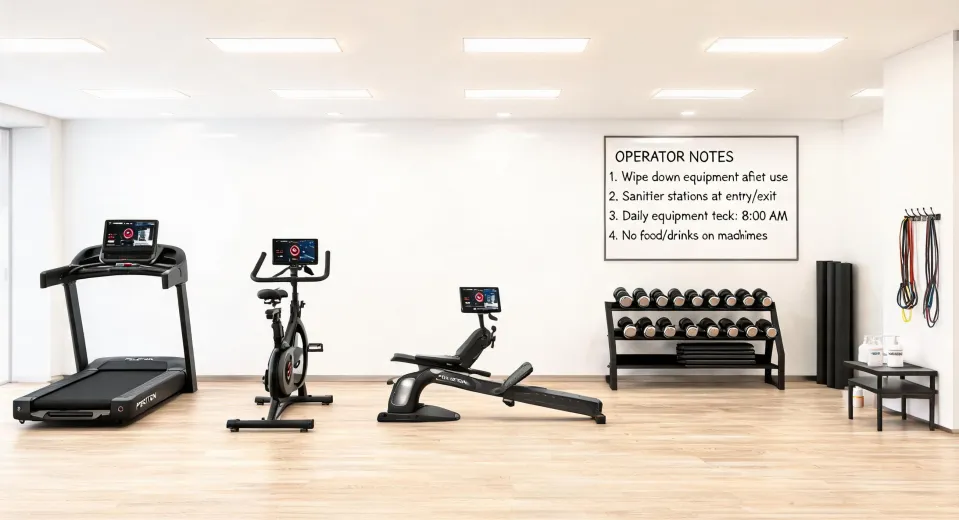
- Space was flexible. We didn't need a full gym. A conference room conversion worked. We put two bikes and one tread in a 200 sq ft room.
- No maintenance contract required. One-year warranty standard. Extended coverage optional.
I sat down with our finance team. The traditional lease: $18K/year, 5 years locked, equipment would be outdated in year 3. The Peloton option: $15K upfront, plus $5K/year for subscriptions (covering 12 bikes and treads). After 3 years, total cost: $30K vs. $54K. And we could upgrade hardware at any time because Peloton's product upgrades mean we weren't stuck.
"I kept asking myself: is saving $24K over 3 years worth potentially having less 'serious' equipment? The worst case was some employees preferring a traditional gym. The best case was a flexible, future-proof solution."
The Result: What We Actually Did
We went with Peloton. It's been 9 months. Here's the honest reflection.
Adoption? Higher than expected. Peloton personalized workout recommendations and the leaderboard system created a community. Our marketing team does a "Tuesday Tread" challenge. The sales team uses the yoga classes for stress management. We even use the strength classes for our warehouse team's warm-ups (they use the content on the app, not the equipment).
There's a downside: if you want heavy lifting, this isn't your setup. We don't have a squat rack or hex dumbbells beyond 50 lbs. For powerlifters, our gym isn't adequate. But for 80% of our 200 employees—people who want a 30-minute cardio class, a yoga session, or to stay active during lunch—it's perfect.
To be fair, I've seen the opposite argument. Some employees still go to an external gym for heavy lifting. Our Peloton setup doesn't replace that. But it's way better than having zero on-site options, which was the alternative our CFO would have accepted.
The Maintenance Reality
I do want to be transparent about something: the Peloton ecosystem isn't maintenance-free. In month 5, a bike's resistance knob started clicking. Not a big deal—we called service. They had a replacement part shipped in 3 days. Total cost: $0 (warranty).
Compared to that traditional treadmill lease? I've heard horror stories from peers at other companies. A commercial treadmill's motor belt snapped—replacement cost $800, took 2 weeks. During that downtime, the equipment was just... there. Unusable.
The Lessons: What I'd Tell Another Buyer
If you're an office admin, HR director, or facilities manager considering a company gym, here's my honest advice.
This solution works for:
- Companies with 50-500 employees where fitness is a perk, not the main amenity
- Spaces that can't handle a full commercial gym (square footage constraints)
- Workforces that value variety and on-demand content over heavy lifting
- Organizations that want to show a modern, tech-forward culture
It might not work for:
- Companies where employees expect heavy strength training (power racks, Olympic bars)
- Organizations with very small or very large headcounts (under 20 people might not justify the subscription; over 500 might need more variety)
- Teams where the CFO is dead-set against any recurring subscription (the monthly per-bike fee is ~$40-50)
"I recommend this for companies that want a flexible, low-maintenance fitness option. But if your team is full of powerlifters and CrossFitters, you might want to look at a hybrid approach."
The biggest lesson I learned? Don't let the fear of the new make you pick the expensive old. I almost signed that $15K/year lease. It looked professional. It felt safe. But the connected fitness model isn't a gimmick—it's a genuine shift in how office wellness works.
And there's something else. Peloton product upgrades and AI fitness technology mean the equipment gets better over time. A 2024 Peloton Bike+ got a software update that improved the camera for the classes. Try upgrading a commercial treadmill with a software patch. You can't.
Quick Numbers for Your Budget Proposal
If you're building a business case, here's what I'd include:
- Equipment cost: $15K for 3 bikes + 1 tread (our setup). Larger: $25K for 5 bikes + 2 treads.
- Monthly subscription: $40-50 per bike/tread (commercial tier). Total for 4 units: ~$200/month.
- Maintenance: First year free (warranty). Budget $500/year for potential out-of-pocket repairs after year 1.
- Space required: 200-400 sq ft for basic setup. No special flooring needed (though it helps).
- Total year 1 cost: ~$17,400 (equipment + 12 months subscription). Compare to $18K annual lease for ONE commercial treadmill.
This pricing was accurate as of Q4 2024. The market changes fast—Peloton's pricing and bundles evolve. Verify current rates before budgeting. I learned this the hard way: verify invoicing capability and pricing before committing. One vendor we almost used promised a "flat rate" that turned out to be per-unit pricing with a floor. We caught it before signing. Always ask for total contract value in writing.
Final Thought: The Risk of Being Too Conservative
There's a trap in B2B purchasing: the safe choice often costs more than it seems. The traditional lease looked responsible. In reality, it would have locked us into hardware with higher costs and less flexibility. The Peloton choice felt risky because it was different. But the risk was manageable: worst case, we sell the equipment and move on. Best case, we get a flexible, engaging wellness program that employees actually use.
In hindsight, I should have explored connected fitness earlier. But with pressure from the CEO and CFO, I did the best I could with available information. I'm glad I made the call.
A lesson learned the hard way: never assume the traditional solution is the low-risk one. Sometimes the new option isn't just flashy—it's smarter.