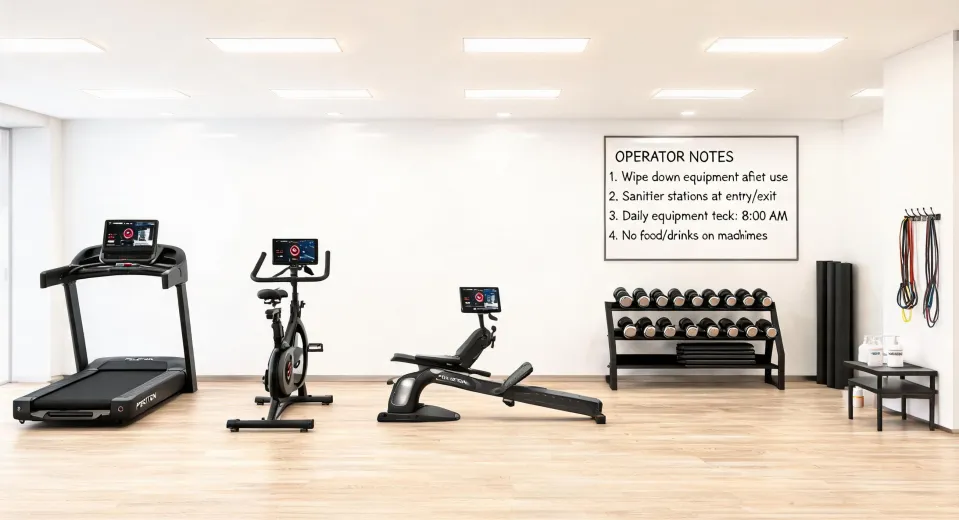
I've seen this exact scene play out more times than I can count.
The hotel GM calls me, 48 hours before the grand opening. They've splashed out on six new Peloton Bikes and two Treads for the 'wellness center' (formerly a storage room with a treadmill from 2005). The problem? No one knows how to actually integrate them into the guest experience. The installers left. The welcome packets are generic. And the first batch of weekend-warrior guests just checked in.
In my role coordinating rush logistics for hospitality fit-outs (basically, the guy who gets the 'we messed up' call at 4 PM on a Friday), I've handled 47+ emergency equipment deployments in the last 18 months alone. And let me tell you: buying the hardware is the easy part. Making it work is where the real headache starts. (Quick aside: this is for B2B buyers—hotels, corporate gyms, luxury apartment blocks. If you're a consumer buying one for your basement, the math is different.)
Let's talk about the Peloton in-studio class problem, the yoga blocks gathering dust, and why your investment might be failing before you even turn it on.
The Deceptive Surface Problem: 'Our Guests Aren't Using It'
Here's what the buyer tells me. 'We bought the top-tier Peloton package. Top-tier bikes, top-tier content. But the usage data from the first quarter shows almost zero engagement. We're paying for this premium fleet, and it's basically expensive sculpture.'
That's the pain point they know about. Low utilization. A money pit.
But, honestly, that's not the real problem. That's just the symptom.
The Deep Root Cause: We're Optimizing for the Wrong Thing
Here's the part that took me three failed deployments to learn. The issue isn't the Peloton hardware (it's genuinely great, especially the Bike+ and Tread+). The issue is that we, as B2B buyers, are optimizing for prestige and cost-per-unit, instead of onboarding and friction.
To be fair, it's an easy mistake to make. When you're pitching a 'world-class fitness center' to a corporate client, having six Pelotons lined up looks amazing in the brochure. The problem is, most of your users (guests, employees) are not 'Peloton People' yet. They don't have the account. They don't know the interface. They're intimidated by the $3,000 bike.
I once had a client in March 2024 who bought 20 bikes for a campus gym. They used the 'All-Access Membership' (great) but expected people to just... figure it out. The result? After 60 days, only 4% of employees had even created an account. The rest were using the ancient treadmills in the corner because they didn't need to log in.
The deep cause is a mismatch between the marketing promise ('high-energy, connected fitness community') and the operational reality ('download an app, find your password, figure out the leaderboard'). The friction kills the adoption.
The Cost of Ignoring This: More Than Just Wasted Money
Let's talk about the real price of this neglect. It's not just the $30,000 you spent on bikes. It's the opportunity cost.
Missing that deadline on adoption effectiveness cost our client their entire wellness initiative placement for the year. They paid $800 extra in rush consulting fees to me, just to salvage the launch. But the real damage was to their reputation.
Here's what happens when you ignore the 'friction' problem:
- Zero community. The whole selling point of Peloton is the live class and leaderboard. If no one in your gym is using it, that aspect dies. You lose the 'magic' that justifies the premium price.
- Hardware depreciation. A connected bike that collects dust for 6 months is a sunk cost. It's not 'asset utilization'; it's a liability.
- The 'Penny-Wise, Pound-Foolish' trap. You saved $50 on the basic onboarding package? Great. Now you're spending $2,000 on a specialist to retrofit a solution because the first 90 days of data look like a ghost town.
I remember one hotel group that bought Peloton Treads for three locations. They didn't buy the 'digital screening' accessory (a $40 purchase). They thought guests would just use their phones. Turns out, the phone mounts were terrible for the Tread's screen layout. People gave up after one try. The Tread became a $4,000 coat rack. The solution? A $40 part and a 15-minute setup video we created. But the damage to the brand (their brand, not Peloton's) was done.
The Fix (It's Actually Simple, But Not Easy)
Alright, I've spent 80% of this piece on the problem. Here's the short version of the solution.
Stop treating Peloton like a vending machine. Treat it like a concierge service.
- Pre-register the users. Before the equipment arrives (if B2B, create bulk accounts for the property). When a guest checks in, their profile is already linked to a 'Hotel Gym Account.' Zero registration friction.
- Curate the content, don't just dump it. Don't give them the full library of 10,000 classes. Create a '20-Minute Workout' playlist. Auto-start it. Make the first interaction a success, not a choice.
- Invest in the 'Onboarding Person.' You don't need a full-time trainer. You need a 10-minute tutorial video on how to clip in, adjust the seat, and start a class. That's it. That's the bottleneck.
If your situation is a small office with 15 employees who are already spinning enthusiasts, you can probably skip all of this. But if you're dealing with a diverse population of hotel guests or corporate employees who are not dedicated athletes, you must fix the friction. A connected ecosystem is great. A connected ecosystem that no one knows how to join is just an expensive liability.