The Pitch That Almost Sold Me
It was a Tuesday afternoon in late 2023. My CEO, fresh off a spin class at a boutique studio in Midtown, had a new religion. "We need a Peloton in the office," he declared, dropping a glossy brochure on my desk. "Not just one. A whole studio experience."
I nodded, doing the mental math. As the guy who manages our annual wellness budget—roughly $45,000 a year for a 200-person company—I knew a single bike was just the entry point. My first thought wasn't about the bike's specs. It was, "What's the total cost of ownership going to look like over three years?"
People assume a Peloton is just an expensive bike with a screen. From the outside, it looks like a premium purchase, but the reality is far more complex. The real cost isn't the hardware; it's the ecosystem. And in Q4 2023, when we got serious about a corporate wellness upgrade, I learned exactly how deep that rabbit hole goes.
Step One: The Price List (That Isn't Really a Price List)
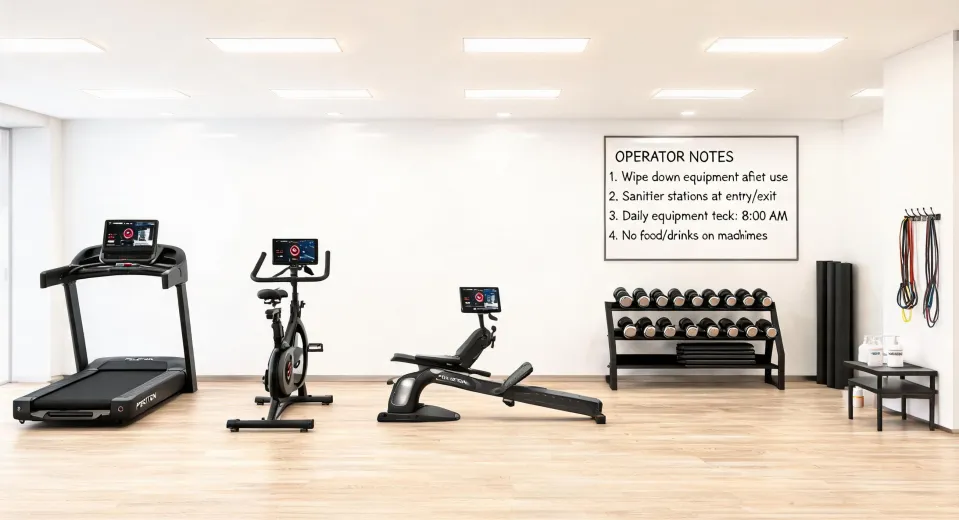
I reached out to Peloton's B2B team. The first conversation was smooth. They sent over a sleek proposal: four Bike+ units, one Tread+, and a custom content package for a "Peloton Row" setup. The headline number? $32,000 for hardware. That was before tax, delivery, and installation.
I asked for a detailed quote. The sales rep hesitated. "We usually do a package price," he said. That's corporate-speak for, "We don't want you to compare line items."
I explained that our procurement policy requires quotes from three vendors minimum—a rule I'd implemented in 2022 after getting burned on hidden fees twice. He sent the breakdown.
That's when things got interesting. The hardware was $28,500. The remaining $3,500 was for "On-Site Setup & Integration." I asked what that included. "Delivery, assembly, and network configuration," he said. Fair enough. But here's the thing—we already had a robust WiFi network and a physical fitness room. Was the integration charge actually necessary, or was it a standard margin pad?
I didn't have hard data on whether other companies paid this fee, but based on my experience with enterprise AV installations, I knew setup fees often include things you can handle in-house. I asked if we could waive the integration if our IT team handled the network part. The rep said no. "It's a standard part of the corporate package."
That was my first flag. A real negotiator would have pushed back, but I'm a procurement manager, not a salesman. I moved on to the next question: what does the subscription cost?
The Subscription Trap (or, the Real TCO)
Peloton's consumer subscription is $44/month for one user. Their All-Access Membership, which lets unlimited profiles on one device, is $59/month. For our office, we'd need the B2B Corporate Wellness plan. That's a completely different beast.
The rep quoted us $1,200 per bike per year for a 5-year commitment. That's $100 per device per month—nearly double the consumer price. And that was for the basic plan. The premium plan, which included live classes from the NYC studio and integration with our HR software, was $1,800 per device per year.
I did the math. For 4 bikes, 1 treadmill, and 1 rower, the basic plan would cost us $7,200 annually. The premium plan? $10,800. Over 5 years, that's $36,000 to $54,000 just for the software.
It's tempting to think you can just buy the hardware and use free content. But the 'buy the hardware and skip the subscription' advice ignores the fact that the bike is essentially a paperweight without the classes. The instructor-led content is the product, not the machine. That's a major cost shift from traditional gym equipment, where you buy a weight rack once and it lasts a decade.
We compared this to a competitor offer—(I won't name names, as per our policy)—which had a lower hardware upfront cost but charged per-session fees. The math was different. The per-session model would have been cheaper for a small office that only uses it sporadically. But for ours, where we expected heavy usage (based on a survey of 80 employees who said they'd use it 3+ times a week), the flat annual fee made more sense.
I should add that the competitive quote's hardware was cheaper but had a 12-month termination penalty, whereas Peloton's was month-to-month after the first year. That nuance matters when you're budgeting for a 3-year cycle.
The Hidden Costs That Almost Broke the Budget
Here's where things went sideways. Saved $80 on delivery by choosing standard shipping over expedited? Ended up spending $400 on a rush reorder when one bike arrived with a cracked screen. We didn't file a claim—our insurance guy said it would raise our premium by more than the cost of the repair. So we paid out of pocket.
The 'budget option' for accessories looked smart until we saw the quality. We compared Peloton's official mat ($59) to a generic one on Amazon ($22). The generic mat was thinner and started peeling after 30 days. We replaced all four. Net loss: $148. Plus the frustration of dealing with returns.
In Q2 2024, when we finally signed the contract, I negotiated a discount. We committed to a 3-year subscription for all six devices and got the annual fee reduced to $1,000 per device. That saved us $1,200 per year—or 11% of our wellness budget.
But the kicker? The installation. The Peloton team spent three days in our office. They ran new cables for the screens, mounted the tread on a special floor mat, and spent two hours configuring the WiFi. Our IT manager watched and said we could have done it in a day. But the corporate contract requires their installation—no exceptions. So that $3,500 setup fee? It was non-negotiable.
I wish I had tracked the exact hours of their on-site work. What I can say anecdotally is that two of their three days were spent waiting for our building's electrician to confirm load capacity. That wasn't their fault, but it meant we paid for 24 person-hours of idle time.
The Real Value (Or, Why I'm Not Complaining)
Despite all this, the project was a success. Employee adoption hit 40% within the first quarter—higher than our previous workout room with generic treadmills and free weights. The Peloton leaderboard and internal teams feature created a sense of community. People were scheduling rides during lunch. It wasn't just a gym; it was a social space.
From a cost perspective, we broke even in 18 months vs. subsidizing boutique studio memberships for the same number of employees. Before the Peloton, we reimbursed up to $50/month for external gym memberships. 40% of our staff used that benefit, totaling about $9,600 annually. Now, we've stopped that reimbursement for in-office employees (while still offering it for remote staff). The net savings, after the Peloton subscription and hardware amortization, is about $4,000 per year.
What was best practice in 2021 may not apply in 2024. The fundamentals haven't changed—total cost of ownership still matters—but the execution has transformed. The old rule of 'cheapest quote wins' would have led us to buy a cheaper bike and a per-session subscription. We would have saved $12,000 upfront but lost flexibility and community features. We went with the middle option: Peloton hardware with a negotiated annual subscription. It wasn't the cheapest, but it had the best TCO.
What I Learned
If you're a procurement manager looking at a similar investment, here's my advice:
- Don't just compare the hardware sticker price. The subscription is the real cost. Calculate TCO over 3-5 years.
- Challenge every line item. I couldn't remove the setup fee, but I got a reduction in the annual subscription by committing to a longer term.
- Track adoption. A gym that nobody uses is expensive at any price. Our survey saved us from guessing usage.
- Beware the accessories trap. Buy official for things that matter (mats, headphones for classes) and generic for consumables (towels, water bottles).
I don't have hard data on industry-wide corporate wellness ROI, but based on our 18 months of tracking, my sense is that a well-executed in-office gym can be a net positive, even with premium hardware. The 'cheap' option often results in a $1,200 redo when quality fails—or worse, a room full of unused equipment.
Oh, and about those keywords you asked about? We didn't buy Peloton kettlebells—they aren't available for corporate accounts yet. We also didn't buy Apple noise-cancelling headphones or Bose earbuds. The CEO wanted to get Beats for everyone, until I pointed out that headphones are a personal hygiene item in a corporate setting. Instead, we provided basic wired earbuds in sealed packages. Saved $2,400. (Should mention: we had a few complaints, but most people brought their own.)
The fundamentals remain: know your TCO, negotiate everything, and never trust a flat rate without asking what's included. That's the real value of a premium procurement process, not just premium hardware.