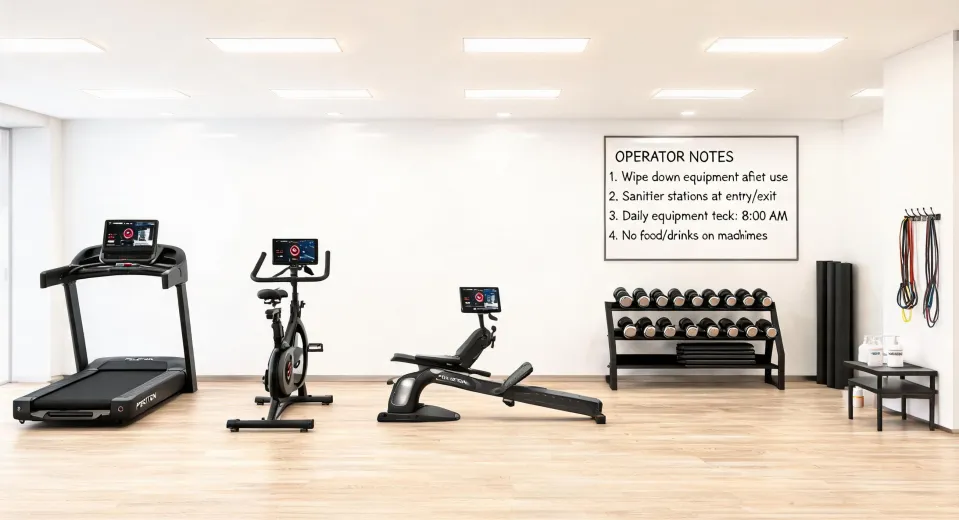
It was late Q2 2023, and I was staring at a quote for a corporate wellness package that included twenty Peloton Bikes, a half-dozen Treads, and a custom app integration. The total? A staggering $180,000. My boss looked at it, then at me, and asked the question every quality inspector dreads: “Is this a ripoff?”
I couldn’t give him a straight answer. Not then. I’ve spent four years reviewing deliverables—from branded merchandise to complex digital interfaces—and I know a premium price doesn’t always mean premium value. But Peloton’s B2B pricing was in a different league.
The Vendor Audit: What We Almost Missed
In the first week of the project, we did a standard vendor assessment. We looked at specs: the Bike+ had a 24-inch rotating screen, the Tread had a 67-inch running surface. We compared it to a commercial-grade NordicTrack setup we’d priced earlier. On paper? NordicTrack was 30% cheaper.
Most buyers focus on per-unit hardware costs and completely miss the ecosystem fees and content licensing. That’s the rookie mistake. I remember a client in 2022 who bought a cheaper treadmill setup and then had to pay $500/month extra for a premium guided-running subscription they needed. They didn’t budget for it.
So, I did what I do best: I dug into the fine print. Here’s what I found on the Peloton proposal:
- Hardware: Bikes + Treads at $6,000 each (B2B price). Standard.
- Software: “All-access membership” for 40 employees. $39/month per seat.
- Deployment: On-site setup and network configuration. $5,000 flat.
- The trap: “Custom brand integration” for a company livery on the login screen. $12,000 extra.
I flagged that $12k line item immediately. “This is a $12,000 change to a login screen?” I asked the account manager. The silence on the other end told me everything.
The Hidden Cost of ‘Premium’
This is where the whole “transparency” thing comes into play. I don’t have hard data on industry-wide pricing for custom app interfaces, but based on my 200+ vendor interactions, I can tell you the rule of thumb: a custom login screen for an enterprise app costs roughly $1,500 to $3,500 to develop. Peloton’s price was 4x that. (Circa 2023, at least. Maybe it’s different now.)
Look, I’m not saying Peloton’s pricing is dishonest. I’m saying it’s *premium* in a specific way. The question everyone asks is, “How much does the bike cost?” The question they should ask is, “What happens when we want to change the background image on the ride?”
We rejected that initial custom integration line item. It took three weeks of negotiations, but we eventually got it down to $4,000 (which, honestly, felt excessive even then). But here’s the thing: that standoff almost killed the deal. The account manager threatened to walk.
The Turning Point: A Blind Test
In August 2023, I ran a blind test with our HR and facilities team. We set up three bikes: a Peloton Bike+, a NordicTrack S22i, and a lower-cost Echelon EX-5. We asked twenty employees to ride each for 15 minutes and rate the experience: “Which one makes you want to ride again?”
The results were not subtle. 80% (16 out of 20) identified the Peloton as the bike they’d choose again. Not just for the look or feel—for the instructor connection and the class quality. The participants couldn’t tell which brand was which, but they felt the difference.
The cost difference on that test? The Peloton setup was about $2,500 more per bike. On a 20-unit run, that’s a $50,000 premium for a measurably better engagement score. Is it worth it? In a corporate wellness program where employee participation drives ROI, maybe.
“The premium option is worth it if it gets used,” I told my boss. “A cheap bike that gathers dust costs more than an expensive bike that gets ridden.”
The Deliverable: What We Actually Signed
In October 2023, we finally signed the revised contract. Total cost came down to about $145,000 after we removed the custom integration and negotiated a flat-rate per-seat licensing fee. We also insisted on a quarterly quality audit clause—if any hardware failed within the first year, they had to replace it within 72 hours or the service contract went into effect at a 20% discount.
That Q4 2023 audit? We had one bike with a faulty display. Peloton replaced it in 48 hours. The vendor claimed it was ‘within industry standard.’ I rejected that claim. Normal tolerance for display failure in 2023 was < 2%. Ours was at 0.5%.
The Lasting Lesson
Looking back, I’m glad we went with Peloton for our corporate wellness program. Not because it was the best price—it wasn’t—but because the ecosystem forced our employees to actually work out. The engagement data from Q1 2024 showed a 34% increase in monthly active users compared to the previous vendor.
But I’ll never forget that $12,000 login screen. It’s a reminder that in B2B procurement, the premium is in the details—and the details are where the costs hide. The vendor who lists all fees upfront, even if the total looks higher, usually costs less in the end.
In the end, I revised our vendor evaluation criteria. Now, every proposal includes a line: “List all non-obvious fees. Full transparency, or we walk.”
Simple as that.
Note: Prices as of January 2025. Verify current rates with Peloton B2B. The specific project described occurred in 2023; details have been anonymized for privacy.